
Subjects
A Level Subjects
Applied Science
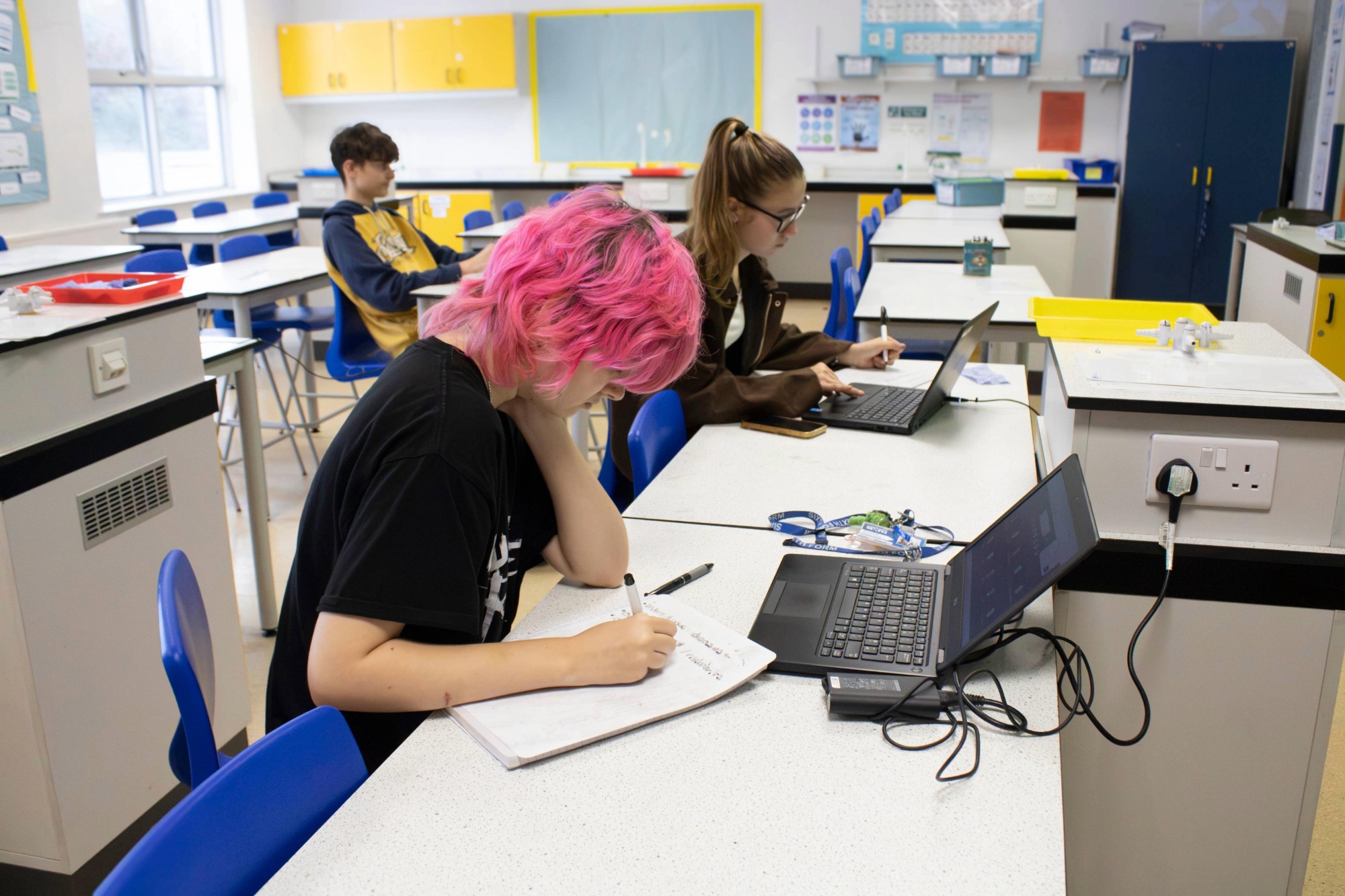
Start your journey into science careers with a practical, real-world course. It is equivalent to one A Level, making it an ideal choice alongside other subjects or as part of a science-focused programme.
WHY APPLIED SCIENCE AT LISKEARD
At Liskeard, Applied Science is taught by experienced and enthusiastic teachers in a supportive small group environment, supported by a specialist science technician.
ENTRY REQUIREMENTS
Combined science 55 or separate sciences 5 in biology, chemistry & physics; maths 5; English 5
ASSESSMENT
Coursework (internally assessed) and exams (externally assessed)
WORKS WELL WITH
Biology, Health & Social Care, Psychology, Business Studies
MODULES AND UNITS
Year 12: fundamental biology, chemistry and physics · laboratory techniques and safe working · planning, carrying out and evaluating investigations · data handling and report writing · science in real world contexts
Year 13: extended practical investigations and independent research · advanced data analysis · science in health, forensics or environmental science · preparing for university, apprenticeships or science careers
A TYPICAL LESSON
A typical lesson would include the review and consolidation of prior key knowledge before introducing new content through teaching and discussion, as well as a strong practical science element. Students are encouraged to explore ideas collaboratively and independently, all designed to develop laboratory skills and deepen understanding of the work of a scientist.
TRIPS AND ENRICHMENT
Potential visits to local companies and the possibility of guest speakers from both local and national organisations.
LEADS TO
University degrees (often combined with other A Levels), such as biomedical science, nursing, environmental science or forensic science · Apprenticeships in science-based industries · Careers in healthcare, laboratory science, environmental work, pharmaceuticals, engineering support and more.
RECENT DESTINATIONS
Forensic Science degree · Zoology degree · Merchant Navy ‘Systems Engineering’ cadetship with the Royal Fleet Auxiliary
Art & Design
 Develop your creative thinking and artistic skills through practical experimentation, technical skill development and the study of historical and contemporary art, with a personal response encouraged throughout and the chance to share your ideas with a wider audience.
WHY ART & DESIGN AT LISKEARD
Personalised learning through a structured curriculum, bespoke tutorials and guided learning, with students’ work celebrated each year in the end-of-year Exhibition of Creativity.
ENTRY REQUIREMENTS
Art, photography, media or textiles 6; English language 5
ASSESSMENT
Personal investigation with written study (60%); externally set practical exam (40%)
WORKS WELL WITH
Photography, Textiles, Product Design, Media Studies, English Literature
MODULES AND UNITS
Practical experimentation and exploration, technical skill development, historical and contemporary investigation and analysis, aesthetic understanding and critical judgement, building a confident understanding of visual grammar: line, shape, colour, tone and texture.
A TYPICAL LESSON
Lessons are studio-based and practical. Students develop their own projects through drawing, experimenting with media and refining ideas. This is alongside one-to-one tutorials and group critiques. Time is also spent researching artists and annotating sketchbooks to connect practical work to wider art and design.
TRIPS AND ENRICHMENT
Gallery and exhibition visits to inspire and inform project work, plus the end-of-year Exhibition of Creativity, where students display their work to the school and the public.
LEADS TO
Past students have gone on to study marine photography, natural history illustration, journalism, graphic design, film and TV, animation, architecture, ceramics and glass, and design and innovation. The course also builds research, creativity, innovation and communication skills that matter in every field.
RECENT DESTINATIONS
Fine Art degree · Art degree · Costume Design degree · Illustration degree
Biology
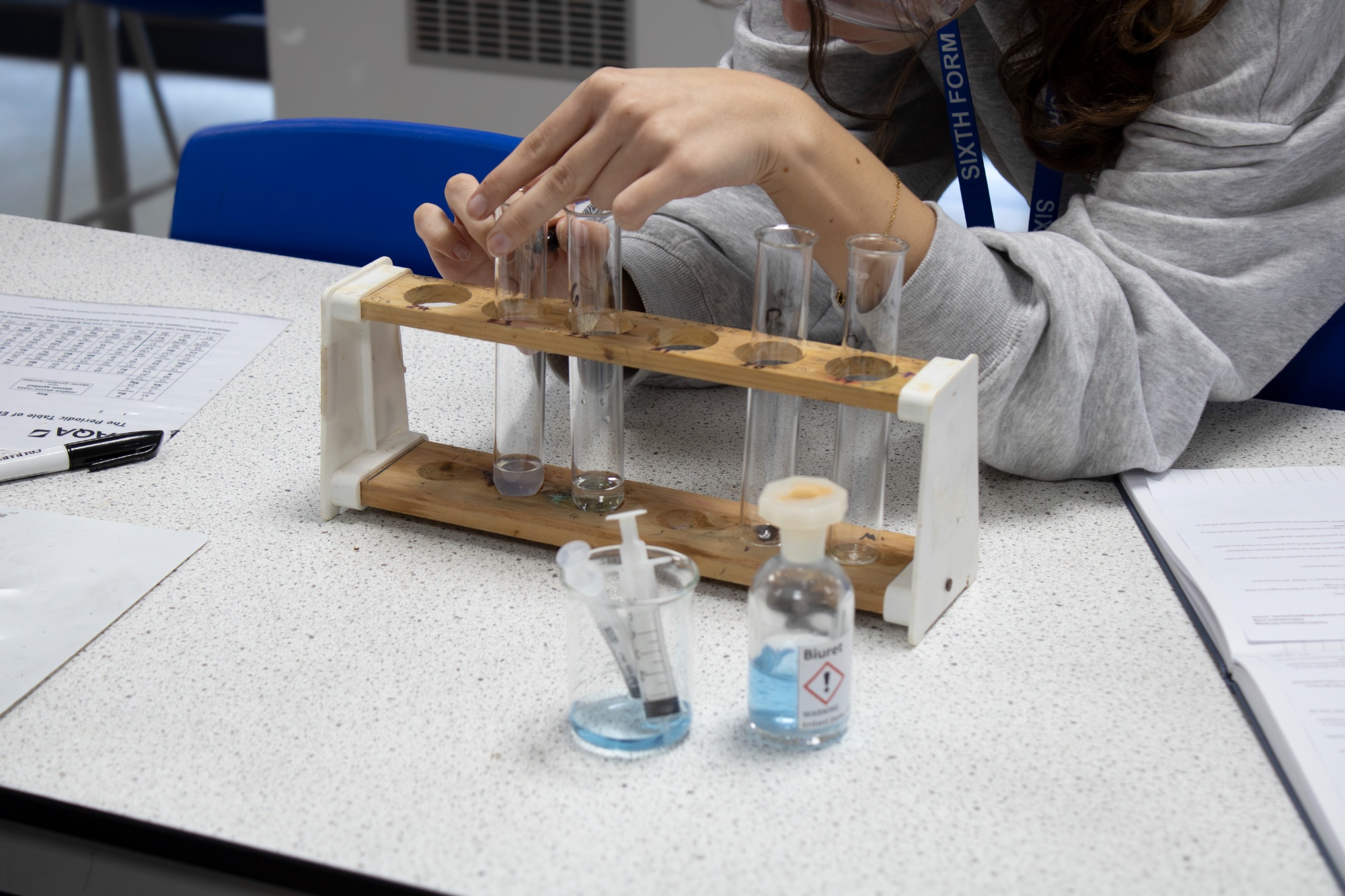
Explore the natural world at a macroscopic and microscopic level, from molecular interactions and physiology to evolution, and tackle some of the biggest questions about life itself, at a time when the world needs biologists more than ever.
WHY BIOLOGY AT LISKEARD
A department passionate about biology that will support your learning in every way, spark your curiosity and teach you how to ask questions, with practical work interleaved throughout the course.
ENTRY REQUIREMENTS
Biology 6 or trilogy science 66; maths 6; English 5
ASSESSMENT
Three written exams (37%, 37% and 26%) plus a Practical Endorsement
WORKS WELL WITH
Chemistry, Psychology, Maths, PE
MODULES AND UNITS
Advanced study of living organisms: physical structure, chemical processes, molecular interactions, physiological mechanisms, development and evolution, examined across biological processes, biological diversity and unified biology, with the Practical Endorsement running alongside
A TYPICAL LESSON
Lessons usually begin with a recap of prior learning before new content is introduced through explanation, diagrams and discussion. Regular practical work develops laboratory skills for the Practical Endorsement, and lessons often finish with exam-style questions to check understanding.
TRIPS AND ENRICHMENT
Fieldwork to study ecology in local habitats, visiting speakers from science careers, and the chance to enter national competitions such as the Biology Olympiad.
LEADS TO
Healthcare, medicine, dentistry, physiotherapy, pharmacology, biochemistry, genetics, bioengineering, bioinformatics, forensic science, psychology, horticulture, conservation, botany, zoology, oceanography, marine biology, science journalism and research.
RECENT DESTINATIONS
Plymouth – Biological Sciences; Exeter – Biological Science; Exeter – Natural Science; Bristol – Biochemistry; Swansea – Marine Biology (after a gap year)
Business
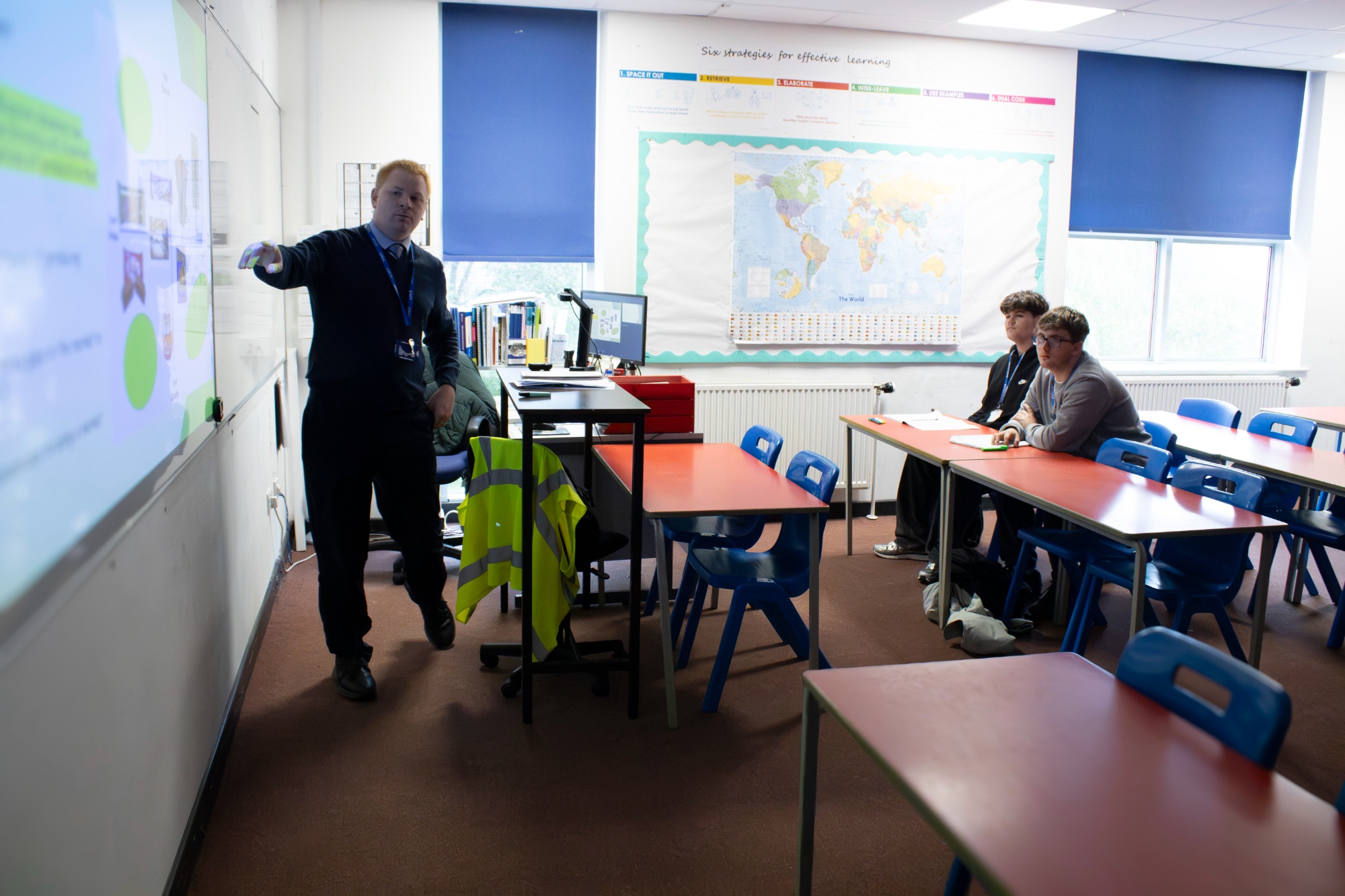
Business is an increasingly relevant and dynamic subject in today’s world. Business is also a real-life subject in an ever-changing world, we will be studying and looking at things which are happening right now!
WHY BUSINESS AT LISKEARD
At Liskeard, we can pride ourselves on offering small groups and a more personalised, discussion-based approach to lessons.
ENTRY REQUIREMENTS
Business 5; maths 5; English 5. If no GCSE business, discuss with the department
ASSESSMENT
Three written exams, 2 hours each (35%, 35% and 30%)
WORKS WELL WITH
Maths, Geography, Politics
MODULES AND UNITS
Year 12: Theme 1, Marketing and people · Theme 2, Managing business activities.
Year 13: Theme 3, Business decisions and strategy · Theme 4, Global business. Year 13 also involves a small research project based on a market or industry, part of a pre-release scenario. The exact topic changes each year.
A TYPICAL LESSON
Lessons are based around discussion, making use of up-to-date and relevant case studies. Students make notes and summarise their discussions, and complete exam questions to show their understanding. Outside of lessons, students use case studies to complete consolidation tasks.
TRIPS AND ENRICHMENT
We have links with a number of local businesses. Exact enrichment will vary each year, but historical experiences have included visits to Trewithen Dairy, events at Plymouth University and a number of external speakers.
LEADS TO
Any business course; accounting, marketing (for example in social media), data analysis, business consulting, human resources. This will also set you up well for apprenticeships.
RECENT DESTINATIONS
Cardiff University (Business Management, Economics) · Bath Spa (Marketing) · UWE Bristol (Business and Management) · University of Exeter (Marketing and Management; Business and Management) · Babcock finance apprenticeship · Local Liskeard businesses started by former students, including LJT Dance and Reformer Pilates.
Chemistry
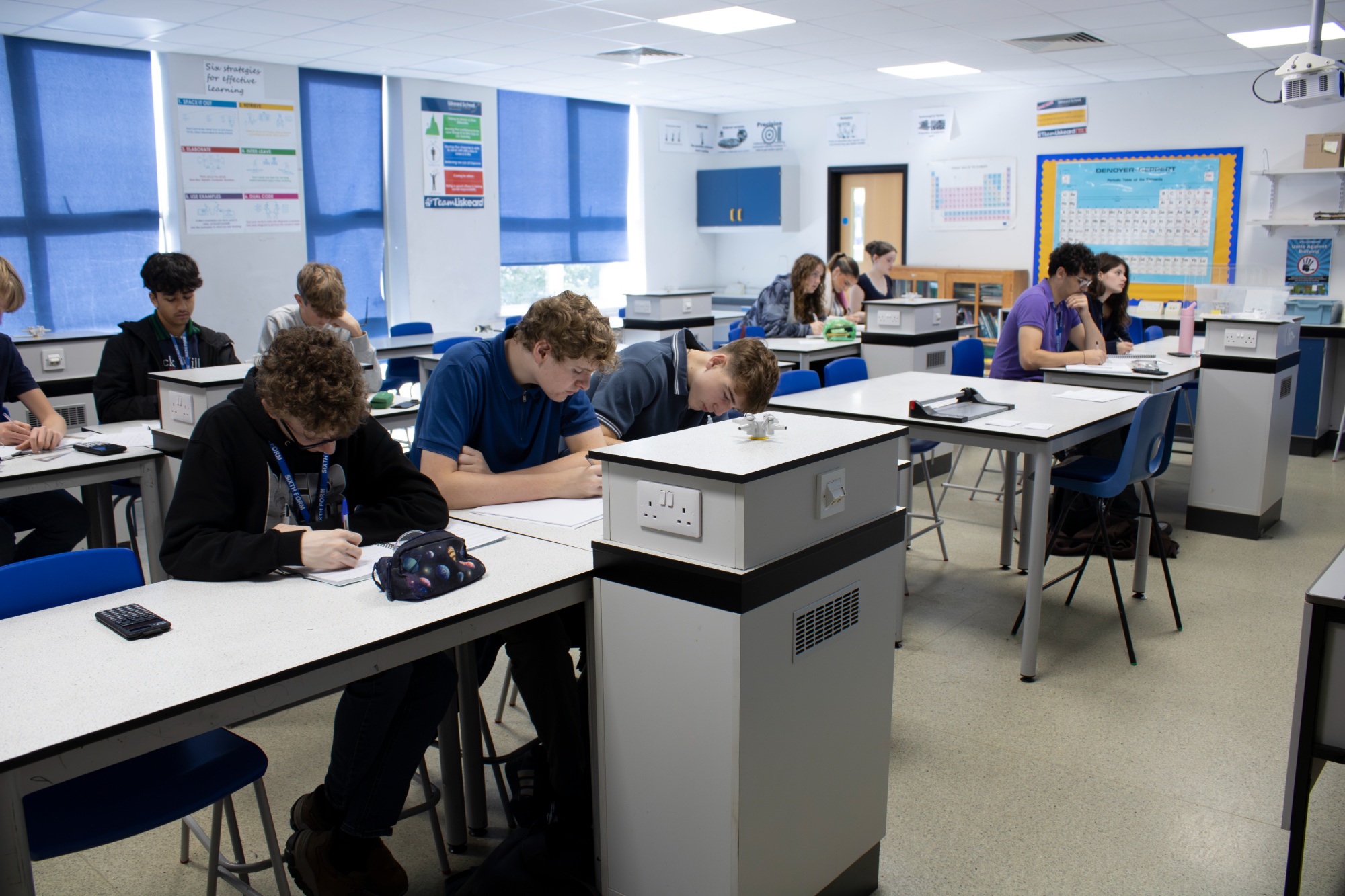
From developing life-saving medicines to creating sustainable technologies, OCR A Level Chemistry opens the door to understanding the world and shaping its future.
WHY CHEMISTRY AT LISKEARD
Chemistry A Level at Liskeard School offers an exciting blend of practical investigation and theoretical understanding. Students develop the knowledge, problem-solving skills and scientific confidence needed for higher education and careers in STEM subjects.
ENTRY REQUIREMENTS
Chemistry 6 or trilogy science 66; maths 6
ASSESSMENT
Three external exams (37%, 37% and 26%) plus a Practical Endorsement
WORKS WELL WITH
Biology, Physics, Maths, Psychology or Geography
MODULES AND UNITS
Year 12: Development of practical skills · Foundations in chemistry (atoms and equations, bonding, amount of substance) · Acid - base and redox reactions · Periodic table and energy · Core organic chemistry
Year 13: Physical chemistry and transition elements · Organic chemistry and analysis · Practical skills are assessed throughout both years.
A TYPICAL LESSON
A typical OCR A Level Chemistry lesson involves learning and applying key chemical concepts such as atomic structure, bonding, energetics, kinetics or organic reactions, through a mixture of teacher modelling and explanation (calculations, problem-solving), practical work and exam-style questions.
TRIPS AND ENRICHMENT
We offer the Chemistry Olympiad each year to students who are interested.
LEADS TO
Healthcare: doctor, dentist, pharmacist, biomedical scientist · Science and research: chemist, forensic scientist, environmental scientist · Engineering and industry: chemical engineer, materials scientist, energy specialist · Emerging fields: pharmaceuticals, sustainable energy, climate science, biotechnology. Also valued in business, law and finance.
RECENT DESTINATIONS
Biomedical Science degree · Environmental Science degree · Environmental Management degree · Neuroscience degree · Paramedic Science degree
Criminology
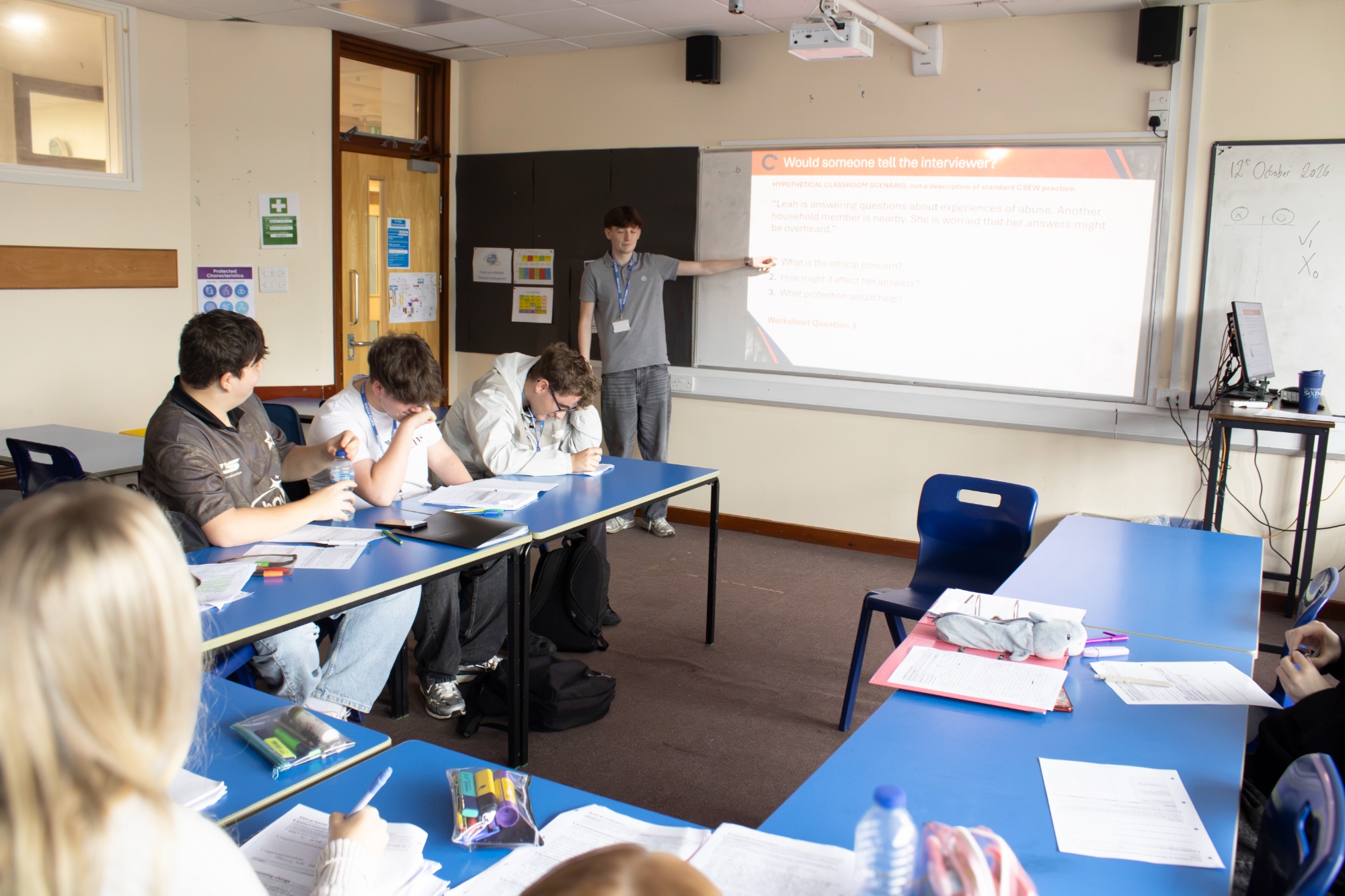
Why do some crimes dominate the headlines while others remain hidden? Criminology gives you the opportunity to explore what drives criminal behaviour, examine how the media influence public perceptions of crime and investigate how the criminal justice system responds. You will develop the skills to evaluate evidence, question assumptions and construct reasoned arguments about contemporary issues.
WHY CRIMINOLOGY AT LISKEARD
Why do people commit crime, and how should society respond? You’ll analyse real cases, test evidence, and receive modelled writing plus tailored feedback to help you build strong arguments. Expect to be challenged and improve your responses.
ENTRY REQUIREMENTS
English Language 5. No previous study of Criminology is required
ASSESSMENT
Two controlled internal assessments (50%) and two external exams (50%)
WORKS WELL WITH
Psychology, Politics, History, English, Philosophy & Ethics
MODULES AND UNITS
Year 12: Changing Awareness of Crime · Criminological Theories
Year 13: Crime Scene to Courtroom · Crime and Punishment
A TYPICAL LESSON
Lessons combine teacher-led explanation with discussion of real cases and close analysis of evidence, including crime statistics and media reports. You will develop written arguments, apply criminological theories to case studies and undertake projects such as awareness campaigns designed to address crime-related issues.
TRIPS AND ENRICHMENT
Students regularly analyse current crime reporting, investigate real case studies and explore campaigns designed to influence public awareness of crime and justice issues.
LEADS TO
Further study in Criminology, Criminal Justice, Law, Sociology and Psychology, and careers such as policing, probation, legal services, social work and the prison service.
RECENT DESTINATIONS
New offer at Liskeard
Drama & Theatre Studies
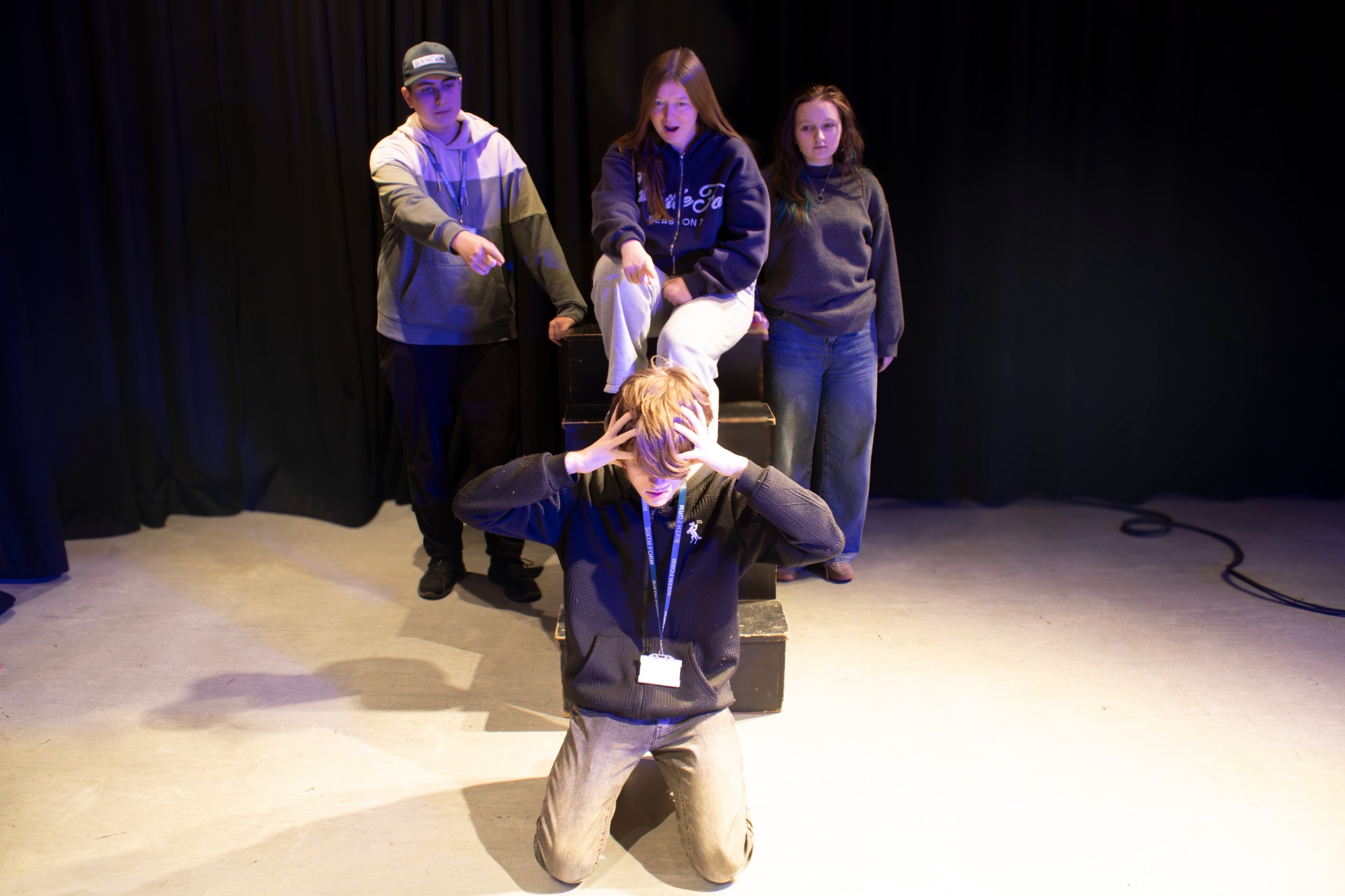
Develop your practical and theoretical understanding of theatre: create performances from scratch, explore practitioners and acting techniques, and study play texts and live theatre as part of a creative, supportive company.
WHY DRAMA & THEATRE STUDIES AT LISKEARD
Learning is a collective process: students bring their own creativity and drive to the studio, and support and champion one another throughout.
ENTRY REQUIREMENTS
Drama 5; English language 5. Must be prepared to attend rehearsals, often after school
ASSESSMENT
Devised piece and portfolio (40%), performance exam (20%), written exam (40%)
WORKS WELL WITH
English Literature, Music, Media Studies, Psychology
MODULES AND UNITS
Devising an original piece with a portfolio of evidence; performing a group scripted piece and a monologue; studying two set texts from actor, director and technician perspectives; and analysing one piece of live theatre. Reading plays, watching performances and researching acting methodology outside lessons are key to success.
A TYPICAL LESSON
Many lessons are practical, in the studio: exploring practitioners and techniques, rehearsing scenes and devising work in groups. Others focus on reading and analysing set texts from actor, director and designer perspectives, and on reviewing live theatre.
TRIPS AND ENRICHMENT
Theatre trips to see live productions, which feed directly into the written exam, plus involvement in school productions and performances.
LEADS TO
Drama school or university to study acting, script writing, film studies or directing; backstage and technical theatre roles in costume, set, lighting and sound design, and stunts; teaching or training others in performance.
RECENT DESTINATIONS
Drama at the University of Manchester, Acting at Arts University Plymouth, Acting BA at Falmouth and Drama at University of Plymouth.
English Language
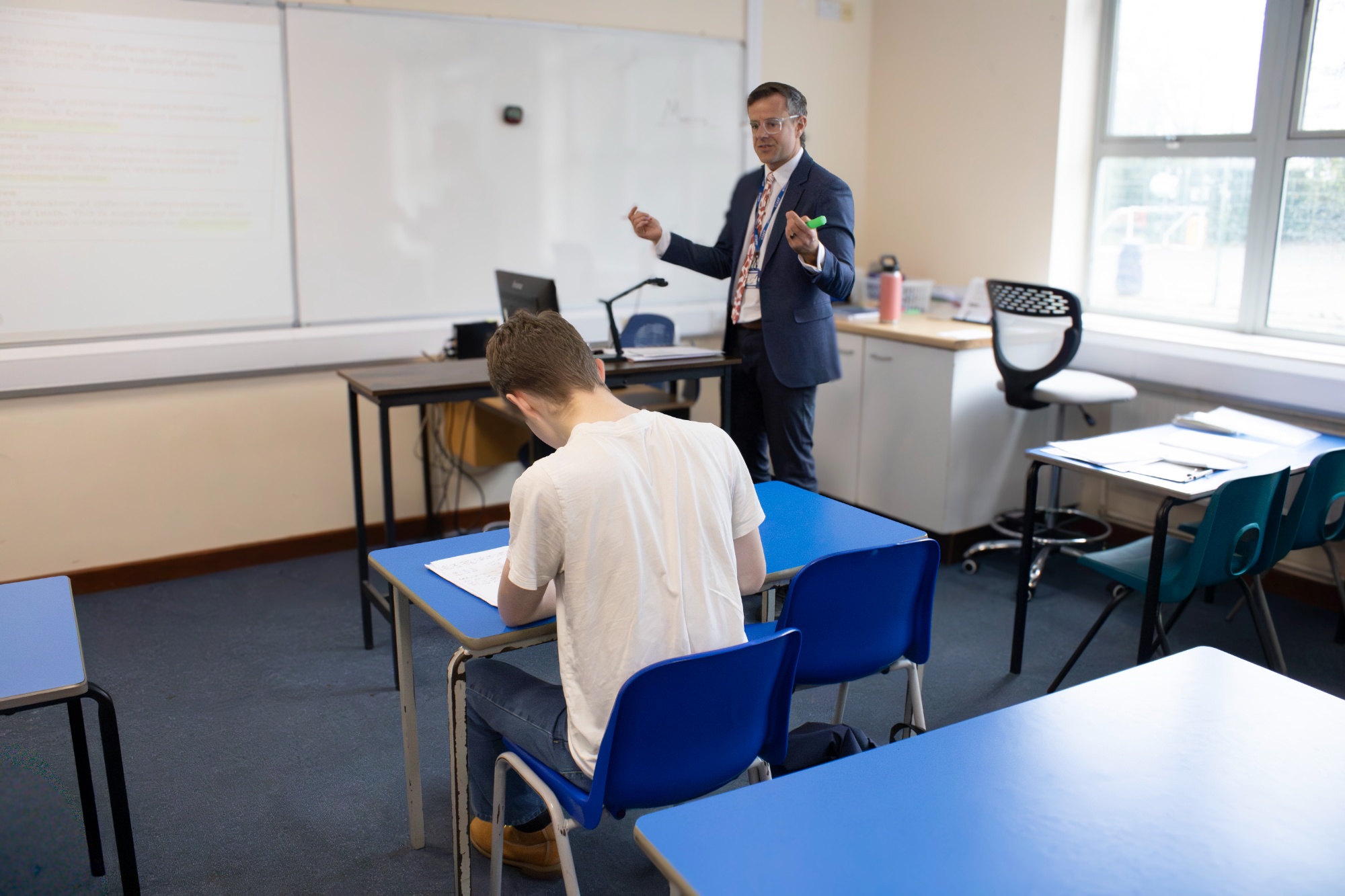
English Language A level challenges your ideas about the world: you will learn to understand how and why people talk the way that they do and how we are manipulated by the texts around us.
WHY ENGLISH LANGUAGE AT LISKEARD
We typically enjoy small classes, which allows us to tailor class materials to current issues and the interests of the students. You can choose what aspect to investigate in your NEA and get plenty of support.
ENTRY REQUIREMENTS
English language 5; English literature 4
ASSESSMENT
Two written exams, 2 hours 30 each (80%), and two pieces of coursework (NEA) (20%)
WORKS WELL WITH
Media studies, psychology and the social sciences
MODULES AND UNITS
Year 12: Grammar toolkit · Representation of individuals and groups · Theories about gender and language · Accents and dialects · Occupational language · Child language acquisition · Starting the NEA
Year 13: Completion of NEA · World Englishes and global English · Language change over time · Revision of all topics · Exam practice
A TYPICAL LESSON
English language often relies on discussions of theories and case studies. We will teach you some tools for analysis and a range of theories and then help you to apply them to a number of varied nonfiction texts. You should be prepared to write pieces of analysis and discuss your ideas with others in the class.
TRIPS AND ENRICHMENT
We have previously taken students to a language conference in London to see the top researchers in the UK present their up-to-date findings and ideas. We subscribe to a magazine aimed at A-level students, which supports understanding of current ideas and research in the world of linguistics.
LEADS TO
This subject can lead directly to courses in English, linguistics, speech therapy, journalism and archive studies. It would be a useful base for law, teaching, politics and any jobs requiring critical thinking and analysis.
RECENT DESTINATIONS
Students have gone on to study a wide variety of courses: English degrees, teaching courses, law, journalism.
English Literature
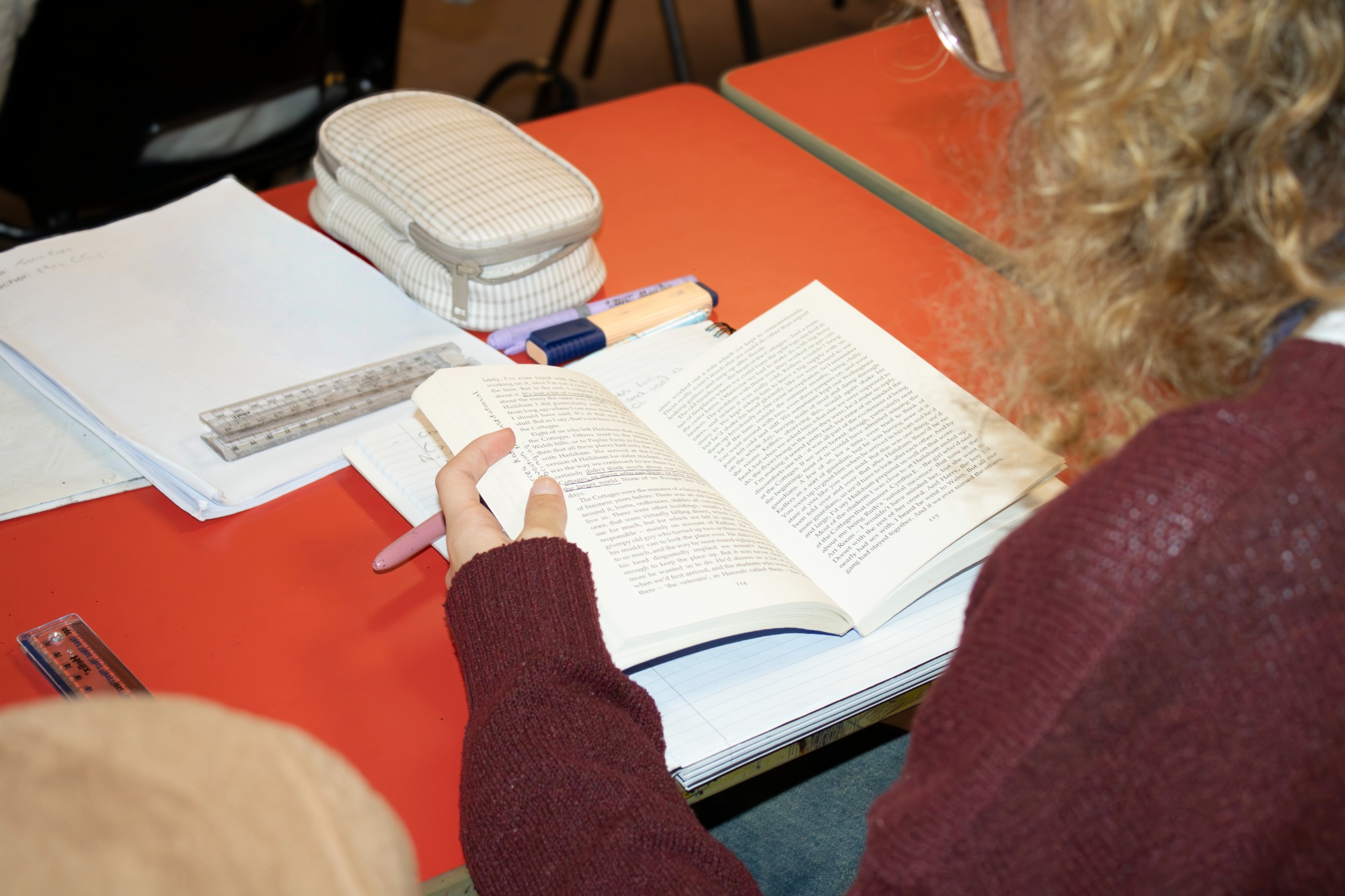
A course designed to engage the heart and soul as well as the mind, with texts spanning five centuries and three continents, full of mature ideas, passion and drama.
WHY ENGLISH LITERATURE AT LISKEARD
Good readers notice what other people miss. Close reading and proper discussion train you to do exactly that, and your teachers will push back on your ideas until you can defend them. Individual feedback sharpens your writing until the interpretation on the page is unmistakably yours.
ENTRY REQUIREMENTS
English literature 6; English language 5
ASSESSMENT
Two written exams (40% each) and coursework (NEA) (20%)
WORKS WELL WITH
English Language, History, Philosophy & Ethics, Drama, Media Studies
MODULES AND UNITS
Aspects of Tragedy: Othello, Death of a Salesman, Tess of the D’Urbervilles, Songs of Innocence and Experience. Political and Social Protest: The Handmaid’s Tale, The Kite Runner. Theory and Independence (coursework across Years 12–13): the AQA Critical Anthology, a novel and poetry read through feminist, Marxist and eco-critical lenses.
A TYPICAL LESSON
Lessons mix group investigations, teacher and student-led presentations, close analysis and discussion, and video interpretations of some texts.
TRIPS AND ENRICHMENT
Theatre trips to see set texts in performance, visiting speakers, and the chance to enter essay and creative writing competitions.
LEADS TO
Excellent training for careers involving communication, such as teaching, journalism, creative writing and publishing, and a strong background for further study in English, media, theatre, education, speech therapy, law, psychology and sociology.
RECENT DESTINATIONS
English Literature degree · Film and Television Studies degree
French
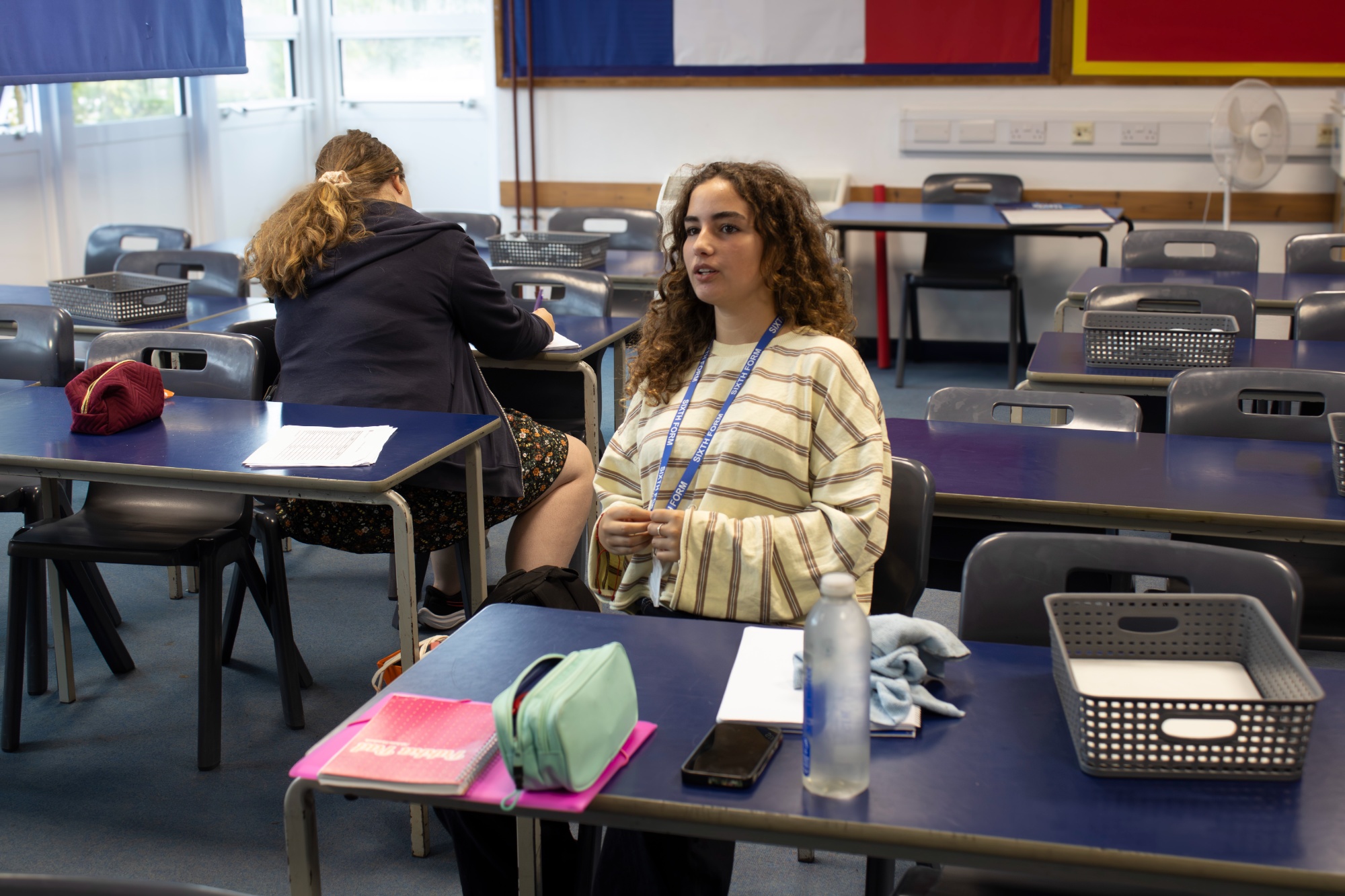
Develop your French language skills and explore francophone culture, literature and lifestyles. Speaking more than one language is a vital skill in an interconnected world and a real advantage in the global economy.
WHY FRENCH AT LISKEARD
Speaking a language well is a habit, and habits are built through practice. Regular conversation and feedback tailored to you build that habit, with clear teaching on the grammar that holds it together. By the end, you will speak with confidence and engage with the French-speaking world on its own terms.
ENTRY REQUIREMENTS
French 6
ASSESSMENT
Three exams: listening, reading and writing (50%); essay writing (20%); speaking (30%)
WORKS WELL WITH
Spanish, English Literature, History, Business
MODULES AND UNITS
In-depth analytical study of a novel and a film, plus an individual research project on a topic linked to a French-speaking country and culture, presented and discussed in French.
A TYPICAL LESSON
Lessons are taught largely in French, mixing listening, reading and speaking activities on contemporary themes with grammar practice and translation. Students discuss the set novel and film, build vocabulary and regularly practice for the speaking exam.
TRIPS AND ENRICHMENT
Opportunities to practice with native speakers, cultural events and French film, and language competitions.
LEADS TO
University study of languages, alone or combined with business, management, law, administration, ICT, engineering, international marketing or journalism. Careers include translating and interpreting, journalism, law, publishing, museum curation and working for an international company.
Geography
A Level Geography encourages students to explore the world’s most pressing physical and human challenges, from climate change and natural hazards to globalisation and urban development.
WHY GEOGRAPHY AT LISKEARD
At Liskeard, A Level Geography is taught by experienced and enthusiastic geographers in a supportive small-group environment. Teachers specialise in different areas of the AQA specification, ensuring students benefit from expert subject knowledge throughout the course.
ENTRY REQUIREMENTS
Geography 5. If no GCSE geography, discuss with the department
ASSESSMENT
Two exams (40% each) and coursework (20%)
WORKS WELL WITH
History and other humanities, English Language, Biology and Maths
MODULES AND UNITS
Year 12: hazards, changing places, coasts and coursework.
Year 13: global systems and global governance, contemporary urban environments, and water and carbon cycles. Coursework is on a topic of your choice.
A TYPICAL LESSON
A typical lesson includes the review and consolidation of key knowledge before introducing new content through engaging teaching and discussion. Students are encouraged to explore ideas collaboratively through class discussion, paired activities and small-group tasks designed to deepen understanding of contemporary geographical issues.
TRIPS AND ENRICHMENT
Four days of fieldwork over the two years. Trip to London.
LEADS TO
Many of our students go on to study geography at a higher level, increasingly specialising in areas such as hydrology (rivers), urban planning, hazard management, GIS and oceanography. Geographers are very employable people! They are much sought after by various employers due to their transferable skills. It offers careers in tourism, conservation, meteorology, environmental issues, local government and many more.
RECENT DESTINATIONS
University of Manchester, International Disaster Management · University of Plymouth, Geography · University of Exeter, BSc Geography with applied GIS · Employment in Switzerland for a major World Bank.
Health & Social Care
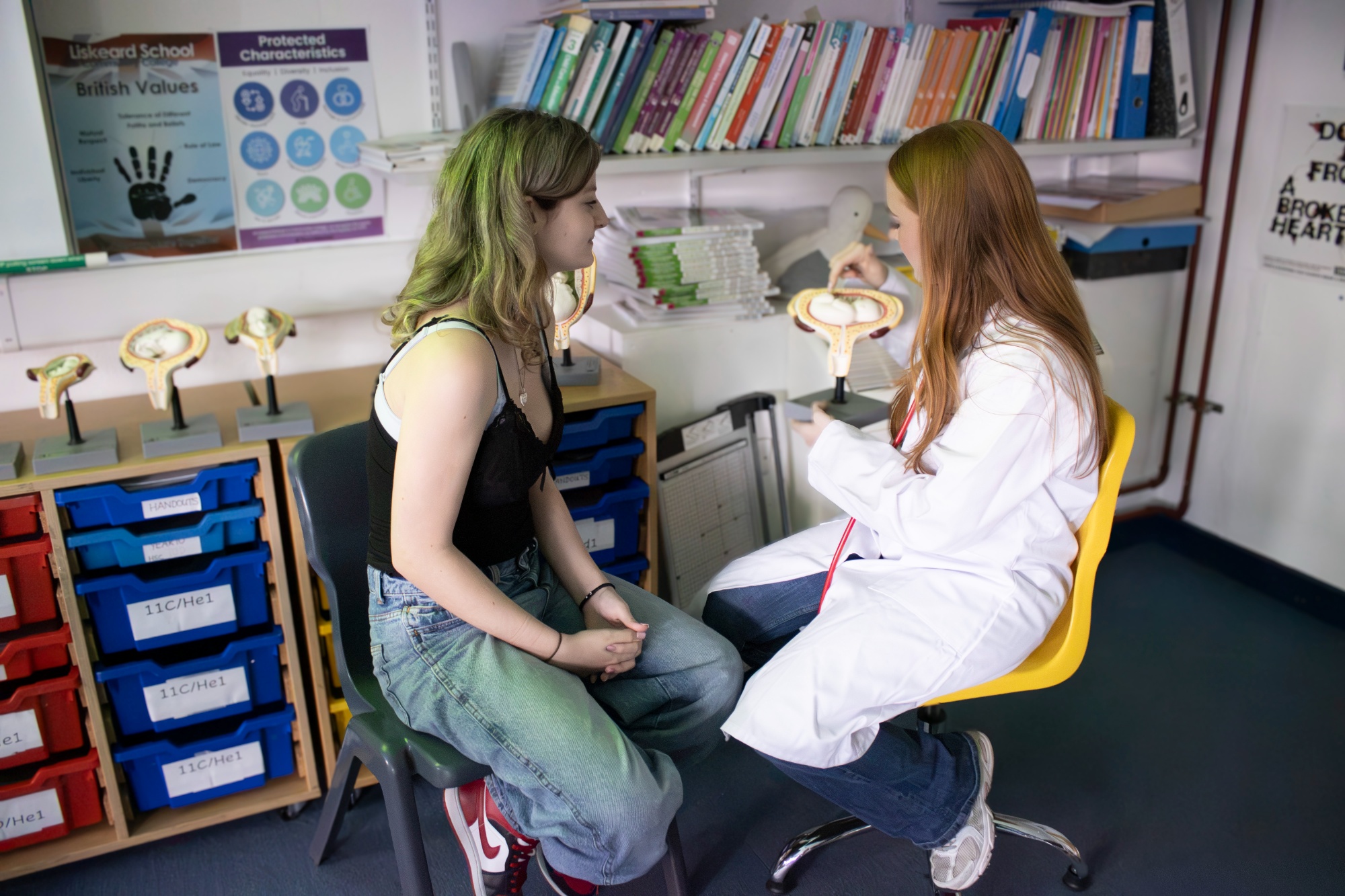
Health and social care is part of every person’s life. Develop the knowledge, skills and practical experience for a rewarding career or further study in health or social care.
WHY HEALTH & SOCIAL CARE AT LISKEARD
Everything you learn here connects to real work with real people. Clear teaching and individual guidance help you apply that knowledge and strengthen your written work. Over the course, you take increasing ownership of your own progress, which is precisely what the sector will expect of you.
ENTRY REQUIREMENTS
Maths 4; English 4; additional interview with the department
ASSESSMENT
Two mandatory externally assessed units, two mandatory NEA units and two optional NEA units
WORKS WELL WITH
Psychology, Applied Science, Biology, Sport
MODULES AND UNITS
Students study the principles behind good care, from equality and rights to health and safety, alongside anatomy and physiology. Coursework focuses on person-centred care and mental health support, building the research, organisation and time management skills needed in the sector.
A TYPICAL LESSON
Lessons combine teaching of key concepts with discussion of real care scenarios and case studies. Students work on coursework assignments with guidance, practice for external exams, and draw on their work experience to link theory to practice.
TRIPS AND ENRICHMENT
Students benefit from visiting speakers working across health and social care, giving them firsthand insight into careers in the sector and helping them connect what they learn in lessons to real practice.
LEADS TO
BSc Nursing (Adult/Child/Learning disabilities/ Mental health), BSc Midwifery, BSc Health and Social Care, BSc Healthcare and Health Science, BSc Health Sciences, BSc Occupational Therapy, BSc Paramedic Science, BSc Public Health and Wellbeing, BA Social Work
RECENT DESTINATIONS
Apprenticeship – Nursing Associates; Paramedic course; Apprenticeship – Dental Nurse
History
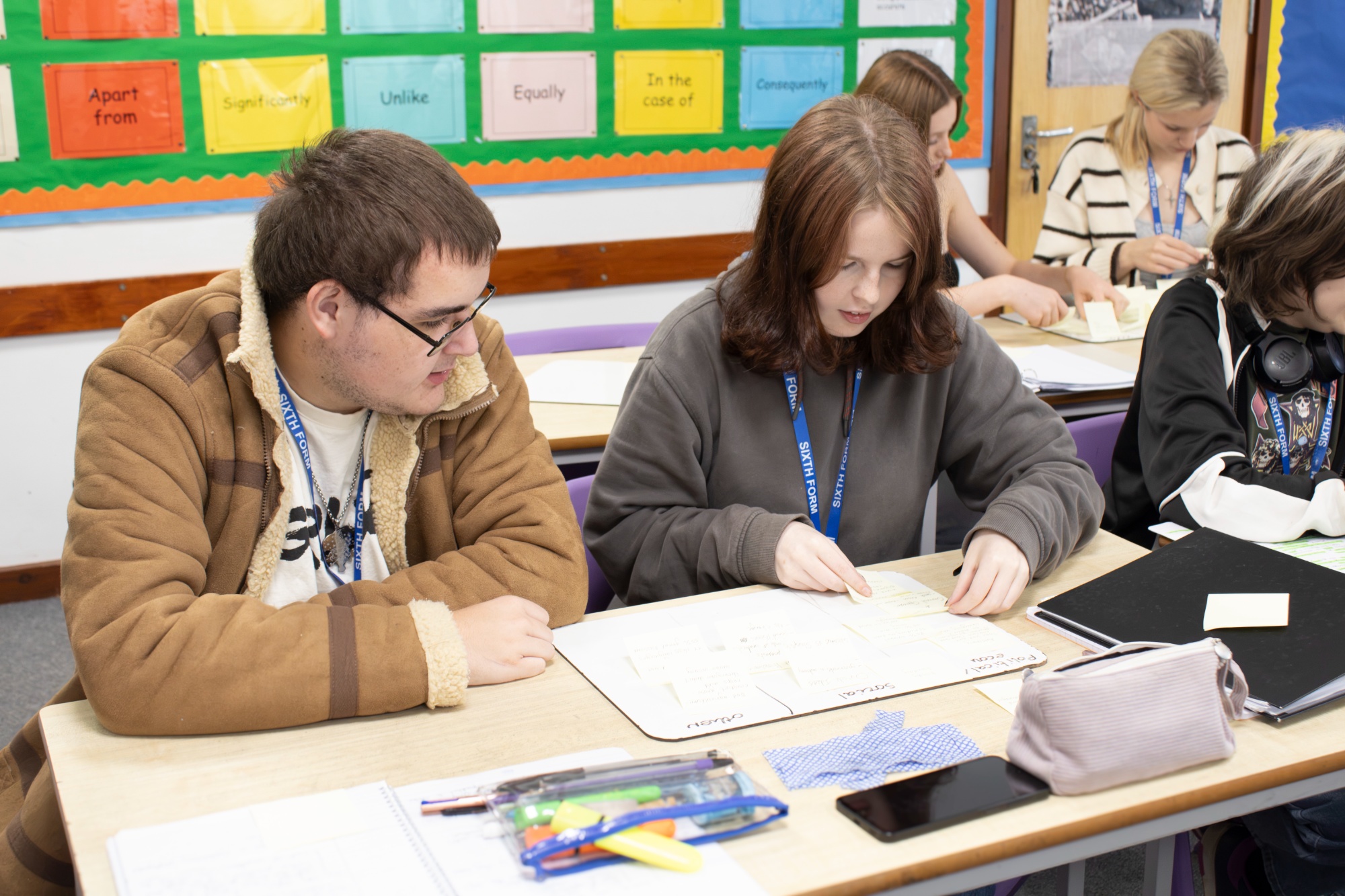
One of the most respected, flexible and inspiring A Levels. Understand how and why people acted in the past, develop a critical attitude to evidence, and learn to build your own well-reasoned arguments.
WHY HISTORY AT LISKEARD
Varied lessons and plenty of group work, with staff who help you build the confidence to contribute, form your own opinions and argue them well.
ENTRY REQUIREMENTS
History 5
ASSESSMENT
Three written exams (80%) and coursework (NEA) (20%)
WORKS WELL WITH
English Literature, Politics, Philosophy & Ethics, Geography
MODULES AND UNITS
Three taught units spanning political and social history: Russia 1894–1941, the Early Tudors 1485–1558, and Britain and Ireland 1798–1921, plus a coursework piece on a topic of your choice.
A TYPICAL LESSON
Lessons build confidence to discuss, present, read constructively and extract information. You’ll write short and extended answers, present through other media, and work co-operatively in groups.
TRIPS AND ENRICHMENT
Four day residential to Dublin.
LEADS TO
Hugely respected by universities and employers, History leads to marketing, media, politics, journalism, teaching, law and more. Its transferable skills (evaluating evidence, supporting arguments, investigation and research) prepare you well for higher education and work.
RECENT DESTINATIONS
History degree · Ancient History degree · Law degree
Mathematics

Build on GCSE topics and discover new areas of mathematics, from calculus to modelling the physical world. Highly regarded by universities and employers, maths supports many other subjects.
WHY MATHEMATICS AT LISKEARD
Understanding a method in class is one thing. Using it on your own, under pressure, is another. Clear explanations and carefully chosen problems close that gap, while your teachers spot what you have missed and ask you to justify every step.
ENTRY REQUIREMENTS
Maths 6
ASSESSMENT
Three written exams, 2 hours each, covering pure, mechanics and statistics
WORKS WELL WITH
Physics, Biology, Chemistry, Geography, Psychology
MODULES AND UNITS
The Pure Mathematics part builds on GCSE skills, enhancing understanding of proof, trigonometry, sequences, and series, while introducing exponentials, logarithms, differentiation, and integration. Applied Mathematics forms one-third of the course, covering mechanics with motion and forces, plus statistics, focusing on probability, data analysis, and distributions, including the Normal distribution.
A TYPICAL LESSON
Our lessons aim to build confident, independent mathematicians who think critically and solve problems. Through clear explanations, examples, discussion, and practice, students deepen understanding and problem-solving skills. Working alone and together, they explore ideas, tackle new problems, and apply knowledge. They can ask questions, share methods, and gain confidence beyond class.
TRIPS AND ENRICHMENT
The UK Mathematics Trust Senior Maths Challenge and university maths talks and masterclasses.
LEADS TO
A Level Mathematics is a respected qualification valued by top universities and employers. It leads to diverse degrees and careers like engineering, medicine, finance, and computing. Students gain vital skills in logic, analysis, and problem-solving for a data-driven world.
RECENT DESTINATIONS
Oxford University – Maths, Oxford University – Medicine, Bath University – Architecture, Degree Apprenticeship – Airbus, Exeter University – Maths
Mathematical Studies
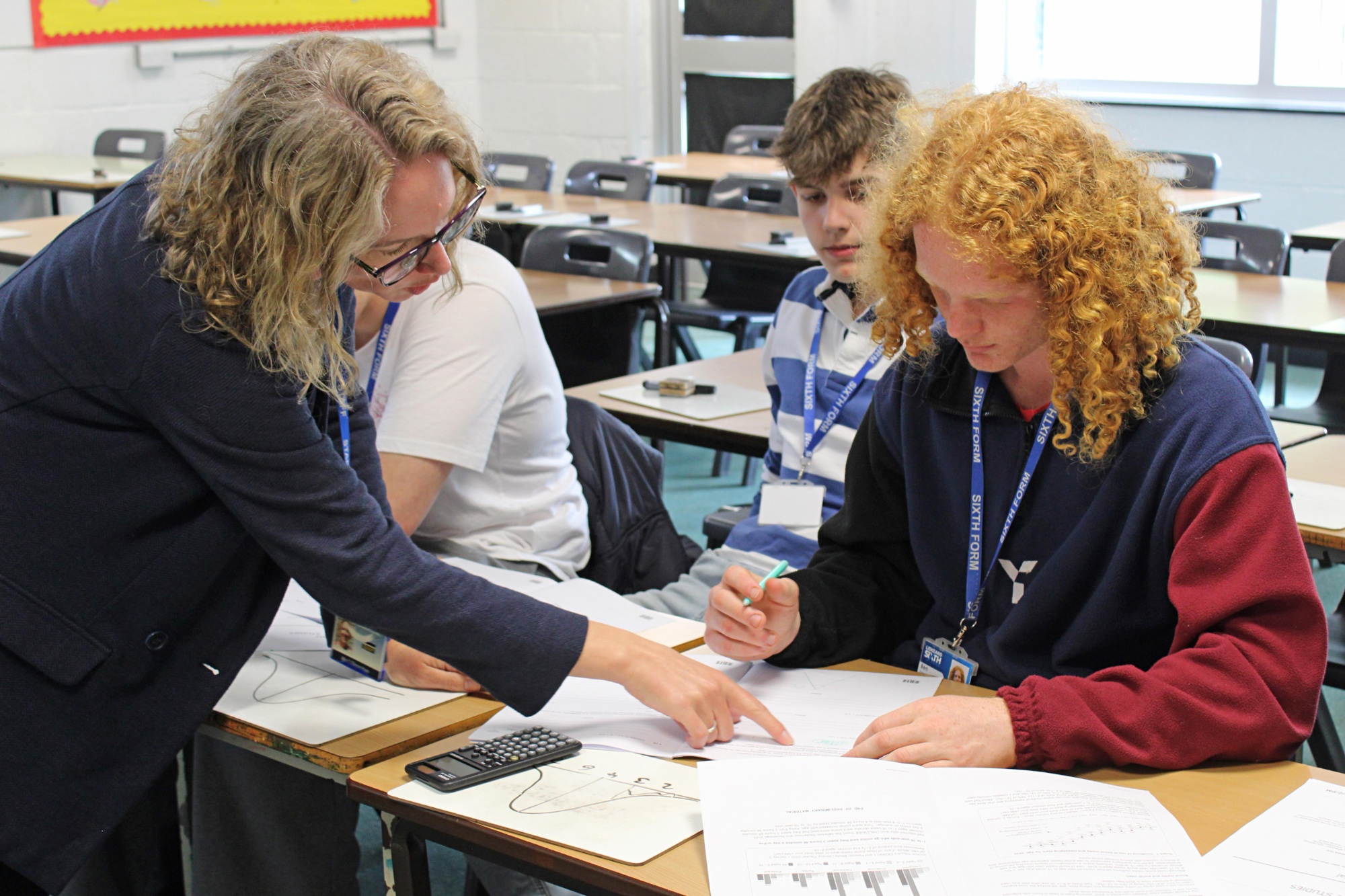
Practical maths built around real life, from payslips, tax and mortgages to analysing data. Ideal if your future needs good quantitative skills but not A Level Maths.
WHY MATHEMATICAL STUDIES AT LISKEARD
Maths beyond GCSE, built for real life. You will use it to interpret information and make better decisions, in your other subjects and in everyday life. Clear explanations and individual support strengthen the essential skills first. Confidence follows.
ENTRY REQUIREMENTS
Maths 4/5
ASSESSMENT
Two written exams, 1 hour 30 minutes each
WORKS WELL WITH
Geography, Business, Psychology
MODULES AND UNITS
Students explore the mathematics behind everyday financial decisions, including payslips, taxation, National Insurance, loans, mortgages, savings and the cost of borrowing. They also develop skills in analysing and interpreting data, using statistical techniques, making estimates and critically evaluating information. Throughout the course, students learn to apply their mathematical knowledge to unfamiliar situations and make reasoned, informed judgements.
A TYPICAL LESSON
Lessons make maths relevant through real-world problems like comparing mortgages, exploring borrowing costs, or analysing media statistics. Students discuss, practice, and collaborate to understand new situations, try different methods, and build confidence, reasoning, and problem-solving skills that extend well beyond the classroom.
TRIPS AND ENRICHMENT
Opportunities to explore mathematics beyond the classroom through personal finance activities, practical investigations and projects using real world data, developing financial awareness and the skills to make informed decisions.
LEADS TO
Core Maths is a valuable qualification for students progressing to university, apprenticeships or employment. It is particularly beneficial for courses and careers involving data analysis, statistics, finance or scientific research, including Psychology, Geography, Business, Biology and Health Sciences. Students develop transferable skills in critical thinking, problem-solving and financial literacy that are valued by universities and employers alike.
RECENT DESTINATIONS
Mathematics degree · Automotive Engineering degree
Media Studies
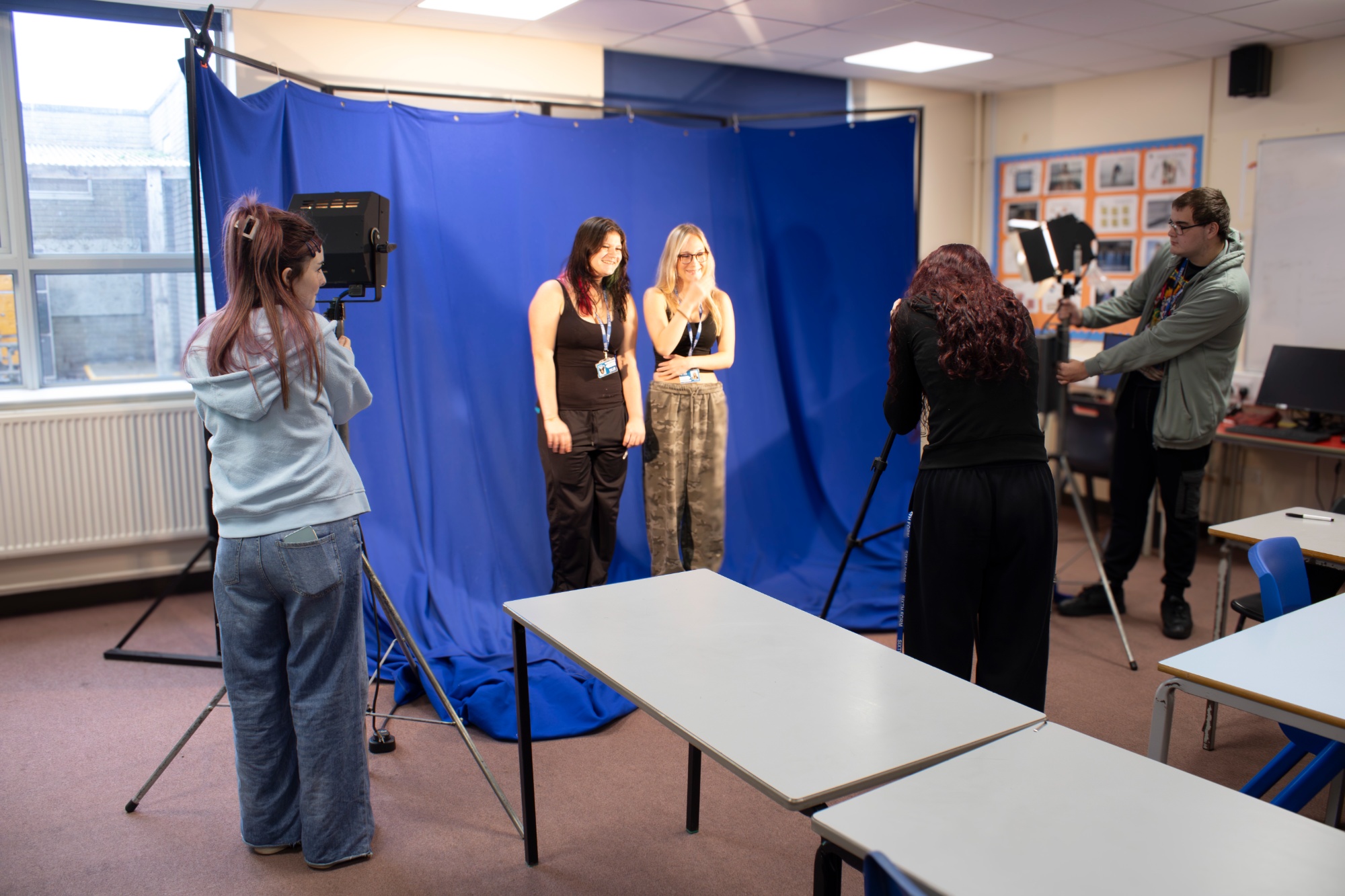
Discover how the media shapes our understanding of the world, learn to spot when you’re being influenced, and produce your own work across print, moving image and websites.
WHY MEDIA STUDIES AT LISKEARD
A dedicated media suite with cameras, sound equipment and blue screen, plus industry-standard editing software including Sony Vegas, Adobe Premiere, DaVinci Resolve and Adobe Photoshop.
ENTRY REQUIREMENTS
4 in two: English language, English literature, media/film, drama, art, photography
ASSESSMENT
Two written exams and a practical production project (NEA)
WORKS WELL WITH
English Language, Photography, Drama, Art & Design, Business
MODULES AND UNITS
Platforms from vloggers to feature film, historical and contemporary. Example texts include Hammer Horror’s The Kiss of the Vampire, Marvel’s Black Panther and Beyoncé’s Formation video. For the NEA you produce two media products, choosing from film, TV, internet, music or magazines.
A TYPICAL LESSON
Lessons mix analysis and production. Students study set media products using key theories, discuss how media shapes audiences and practice exam responses. Practical lessons in the media suite develop planning, filming and editing skills for the NEA.
TRIPS AND ENRICHMENT
Visits to media organisations or university media departments, and opportunities to work on real briefs for school events.
LEADS TO
Journalism, broadcasting, animation, marketing, music and media, with a strong background for degrees in film and media, theatre, journalism, English, marketing, psychology and sociology. Most media students continue into higher education.
RECENT DESTINATIONS
Salford University, Falmouth University, Arts University Plymouth, Bristol University
Music
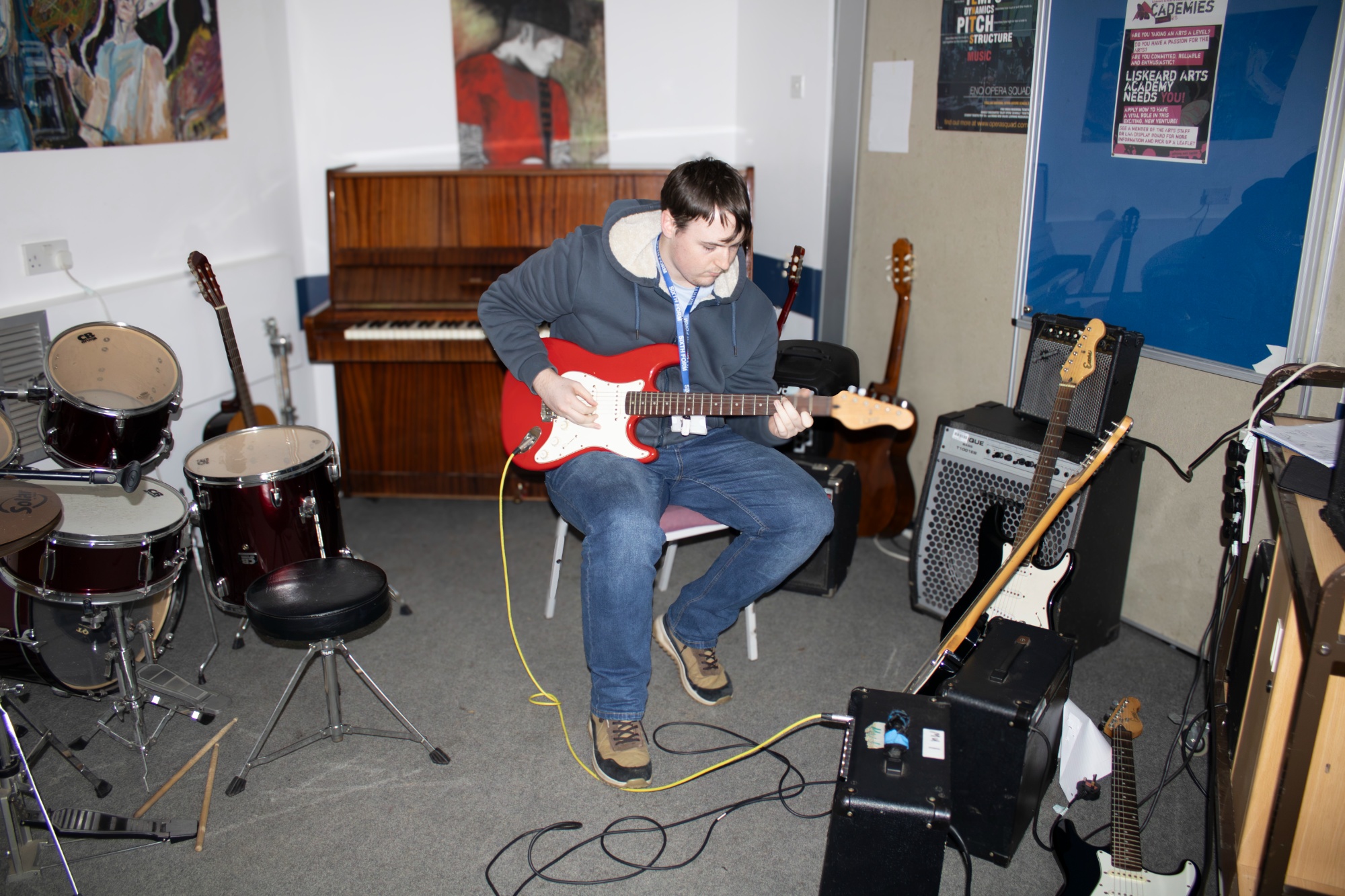
Music is an art, a science and a social skill. Build on your musical strengths, study music across a broad timescale, and develop as both a performer and a composer.
WHY MUSIC AT LISKEARD
Specialist teaching takes your musical interests seriously. Individual guidance in performance and composition helps you refine your technique and make creative decisions you can stand behind. Critically, you will learn to listen like a musician, which improves everything else you do.
ENTRY REQUIREMENTS
Performing music at grade 5 or discuss with the department
ASSESSMENT
Appraising exam (40%), performance (35%) and two compositions (25%)
WORKS WELL WITH
Drama, English Literature, Media Studies, Maths
MODULES AND UNITS
Music in its historical and cultural contexts; musical interpretation and instrumental technique for performing; and melody, harmony and counterpoint across traditional styles, applied to your own compositions: one to an exam board brief and one free composition, at least four and a half minutes in total.
A TYPICAL LESSON
Lessons combine listening and analysis of set works with composition and harmony exercises. Students also prepare and rehearse performance pieces with regular feedback, and develop their own compositions.
TRIPS AND ENRICHMENT
Performance opportunities in school concerts and events, trips to live performances, and the chance to work with visiting musicians.
LEADS TO
University or conservatoire study, and careers as a performer, composer, instrumentalist, sound engineer, music therapist or music teacher. A Level Music also opens access to most other arts and science courses.
RECENT DESTINATIONS
Audio and Music Technology degree · Music Production degree
Philosophy & Ethics (RS)
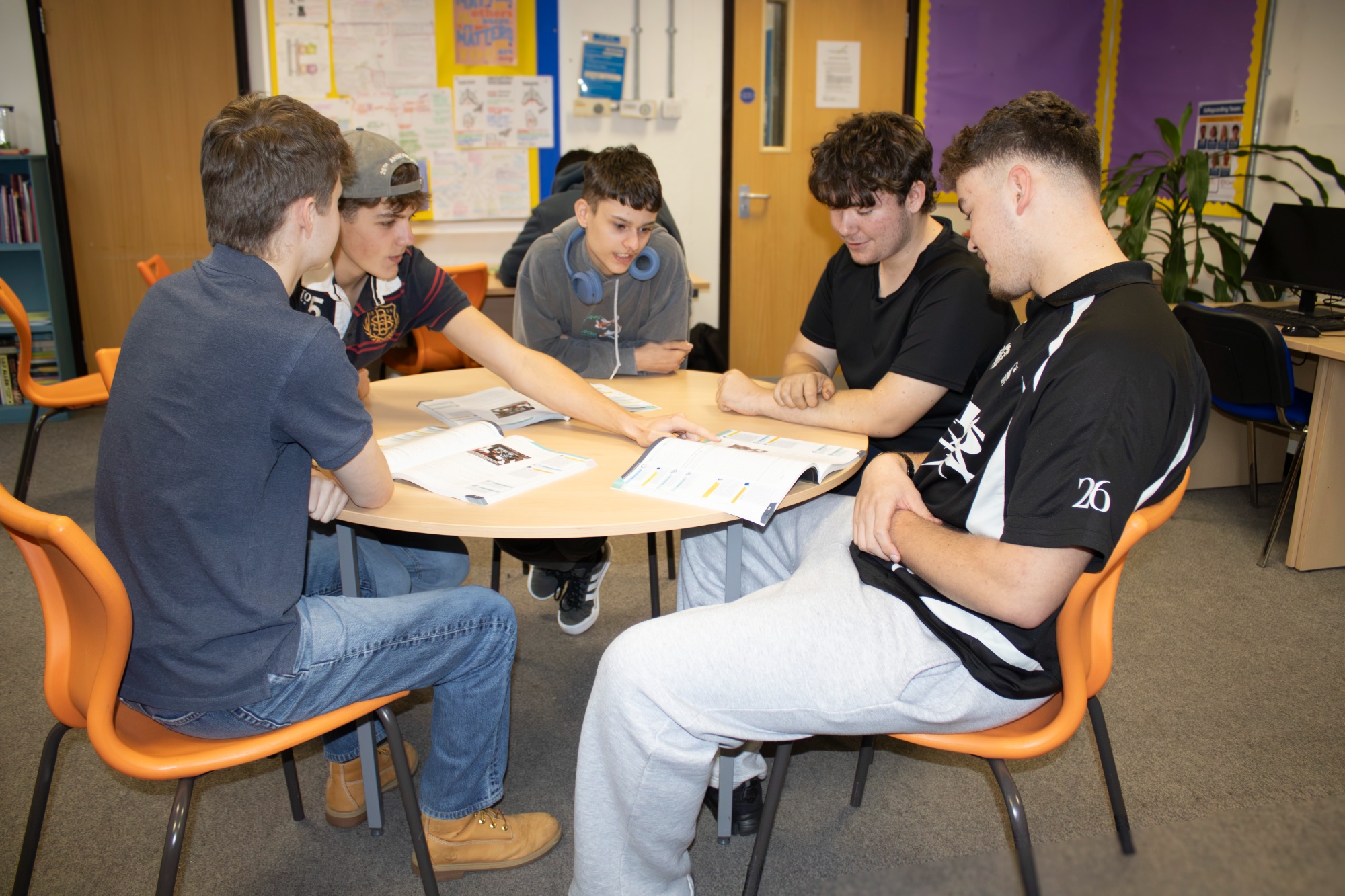
Explore the biggest questions of all time, from how we should make decisions to what makes us human, and become a confident communicator, academic writer and seriously logical thinker.
WHY PHILOSOPHY & ETHICS AT LISKEARD
Are we truly free to choose and are your choices ever really your own? In small, specialist-taught groups, you’ll take questions like these seriously and test your answers against the strongest objections. Individual feedback helps you build a position of your own and learn how to defend it.
ENTRY REQUIREMENTS
English language 6; English literature 6
ASSESSMENT
Three written exams, 2 hours each: philosophy, ethics and developments
WORKS WELL WITH
History, English Literature, Politics, Psychology, Criminology
MODULES AND UNITS
Three units (Philosophy, Ethics and Developments) study famous ideas and theories, ancient and modern, that have shaped law, the arts, politics and belief, including whether religion shapes society or society shapes religion.
A TYPICAL LESSON
Plenty of discussion, debate and reflection, reformulating your ideas and developing persuasive arguments through writing and discussion.
TRIPS AND ENRICHMENT
Visiting speakers, philosophy conferences and student debates.
LEADS TO
Law, journalism, medicine, the media, the police, education and politics. Universities and employers value the transferable skills they develop: reasoning, critical analysis and persuasive communication.
Photography
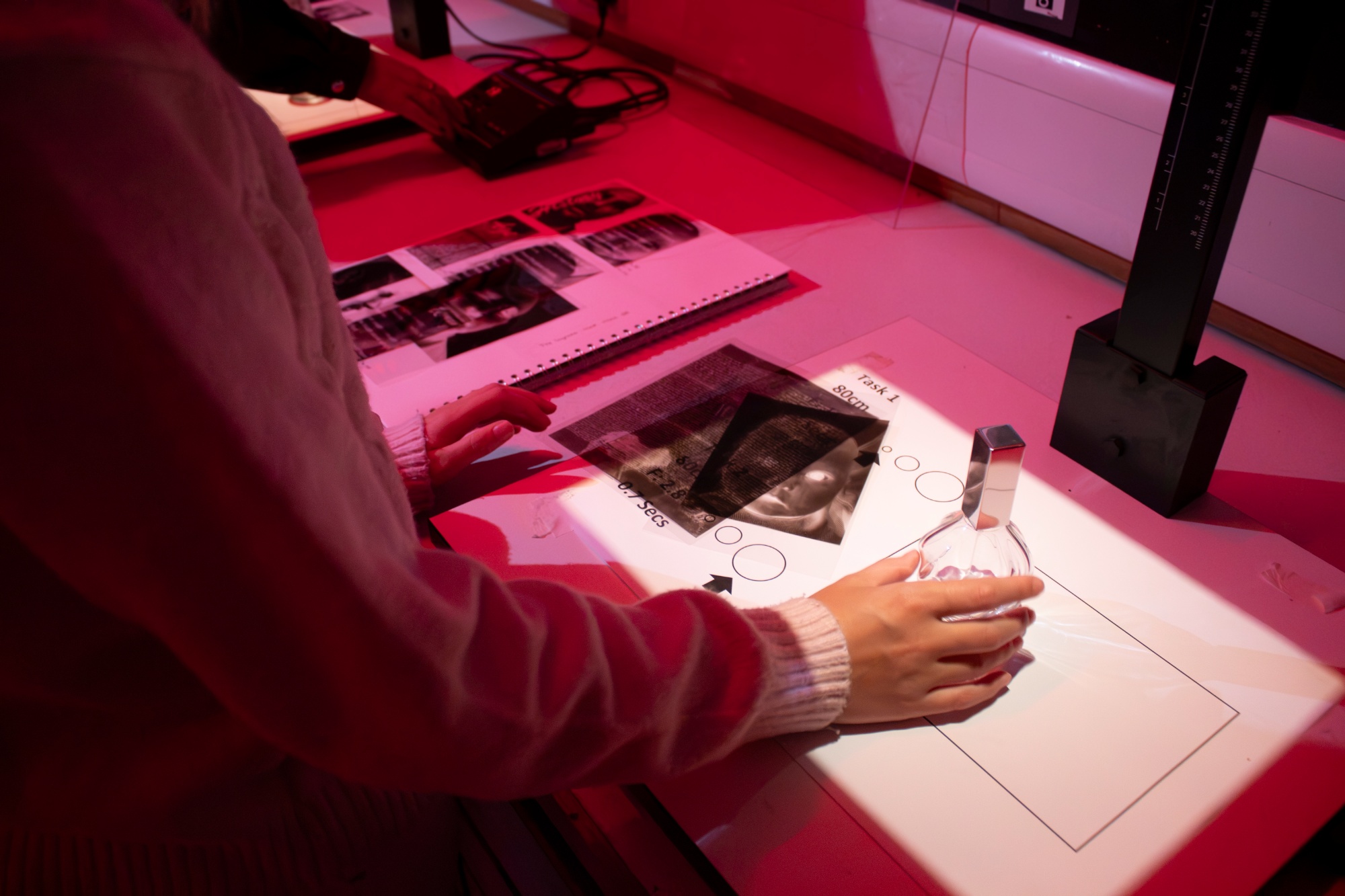
Develop visual communication through lens-based media, from camera-less prints and chemical darkroom processing to DSLR shooting and digital editing, with a personal response encouraged throughout.
WHY PHOTOGRAPHY AT LISKEARD
A working darkroom alongside DSLRs and an editing suite, with bespoke tutorials and real-life professional briefs where appropriate.
ENTRY REQUIREMENTS
Art, photography, media or textiles 6; English language 5
ASSESSMENT
Personal investigation with written study (60%); externally set practical exam (40%)
WORKS WELL WITH
Art & Design, Media Studies,
Textiles, Product Design
MODULES AND UNITS
Begin in the darkroom, layering negatives and creating camera-less prints, then process and print your own photographs from negatives before moving on to DSLR work and digital editing. Throughout: experimentation, technical skill, aesthetic understanding and critical selection.
A TYPICAL LESSON
Lessons combine practical shooting and darkroom or digital editing with research into photographers. Students develop personal projects through experimentation, reflect on their work in sketchbooks, and receive one-to-one feedback through tutorials and group critiques.
TRIPS AND ENRICHMENT
Gallery and exhibition visits, location shoots, and the end-of-year Exhibition of Creativity.
LEADS TO
Past students have progressed to forensics, medical imaging, marine photography, journalism, computer programming, film and TV, animation, architecture and graphic design, with wider routes into illustration, advertising and marketing.
RECENT DESTINATIONS
Fine Art degree · Art degree · Costume Design degree · Illustration degree
Physical Education
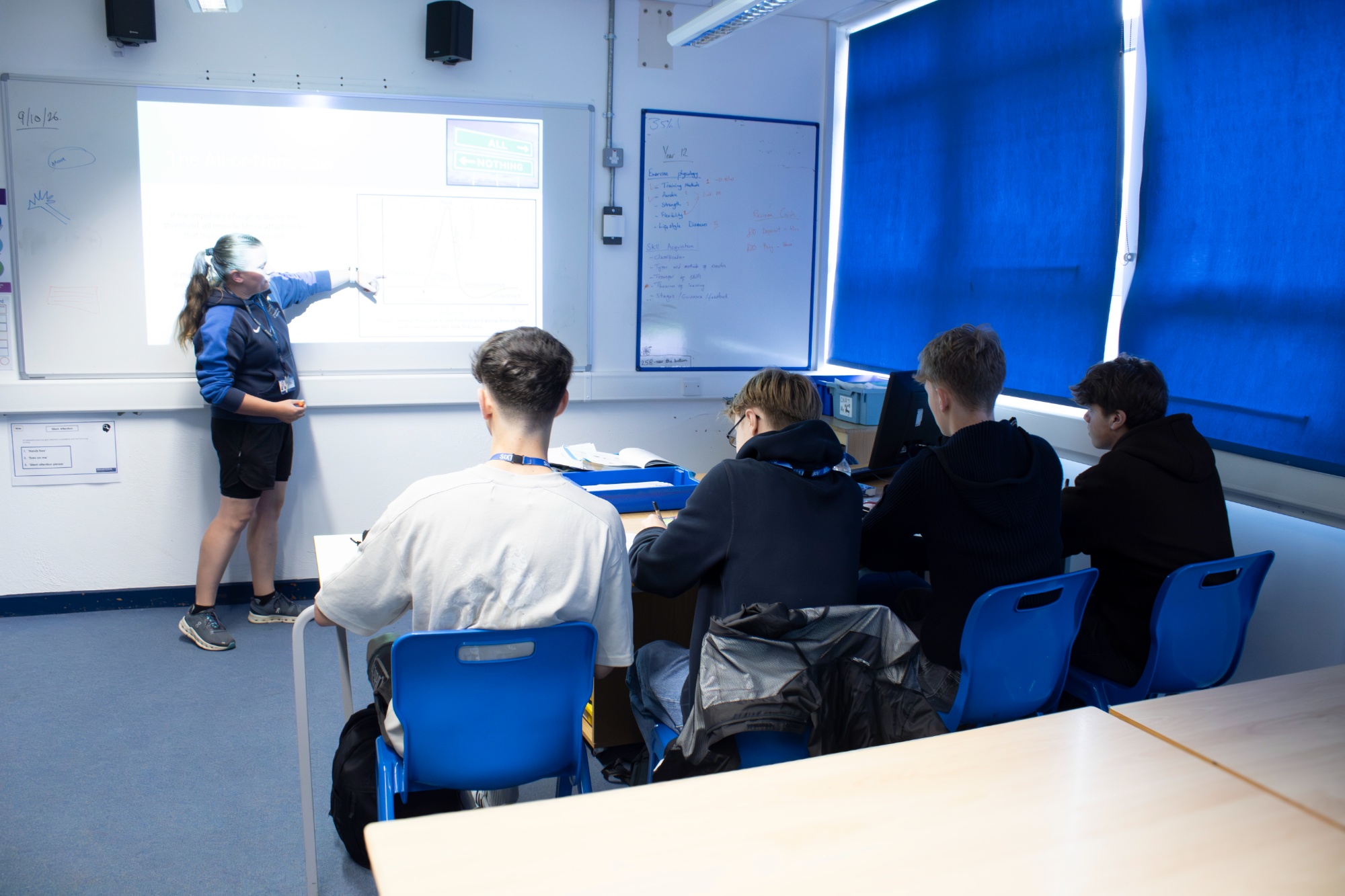
Why do some people run faster than others? How does personality affect performance?
Can technology make athletes better? A Level PE answers these questions and more.
WHY PHYSICAL EDUCATION AT LISKEARD
Sport is more than performance. Explore the science, psychology, and society behind success. At
Liskeard School, A Level PE lets you study the body, mind, and sport’s role in society. It combines science, practice, and analysis, preparing you for careers in sport and health.
ENTRY REQUIREMENTS
PE 5; trilogy science 55. Must play sport regularly. If no GCSE PE, science 6 is required.
ASSESSMENT
Papers worth 30%, 20% and
20%, plus non-exam practical performance or coaching (30%)
WORKS WELL WITH
Biology, Psychology, Health &
Social Care, Sport
MODULES AND UNITS
Year 12: Applied anatomy and physiology ·
Skill acquisition · Sport and society · Practical performance / coaching
Year 13: Exercise physiology and biomechanics · Sport psychology · Sport and society and technology in sport · Practical performance / coaching · Evaluation and analysis of performance (EAPI)
A TYPICAL LESSON
Lessons combine theory, discussion, practical examples and examination practice. Students regularly apply concepts to real sporting situations, analyse performance, complete practical activities and develop extended written responses in preparation for assessment.
TRIPS AND ENRICHMENT
Students have opportunities to engage in leadership, coaching, officiating, practical performance, sports analysis and enrichment activities linked to local and national sporting events.
LEADS TO
Sports Science, Physiotherapy, Teaching, Coaching, Strength & Conditioning, Sports Therapy, Sports Journalism, Sports Management, The Armed Forces,
The Police and a wide range of university degree programmes.
RECENT DESTINATIONS
Students have progressed to university courses in Sport & Exercise Science, Teaching, Physiotherapy, Sports Coaching and other related disciplines.
Physics
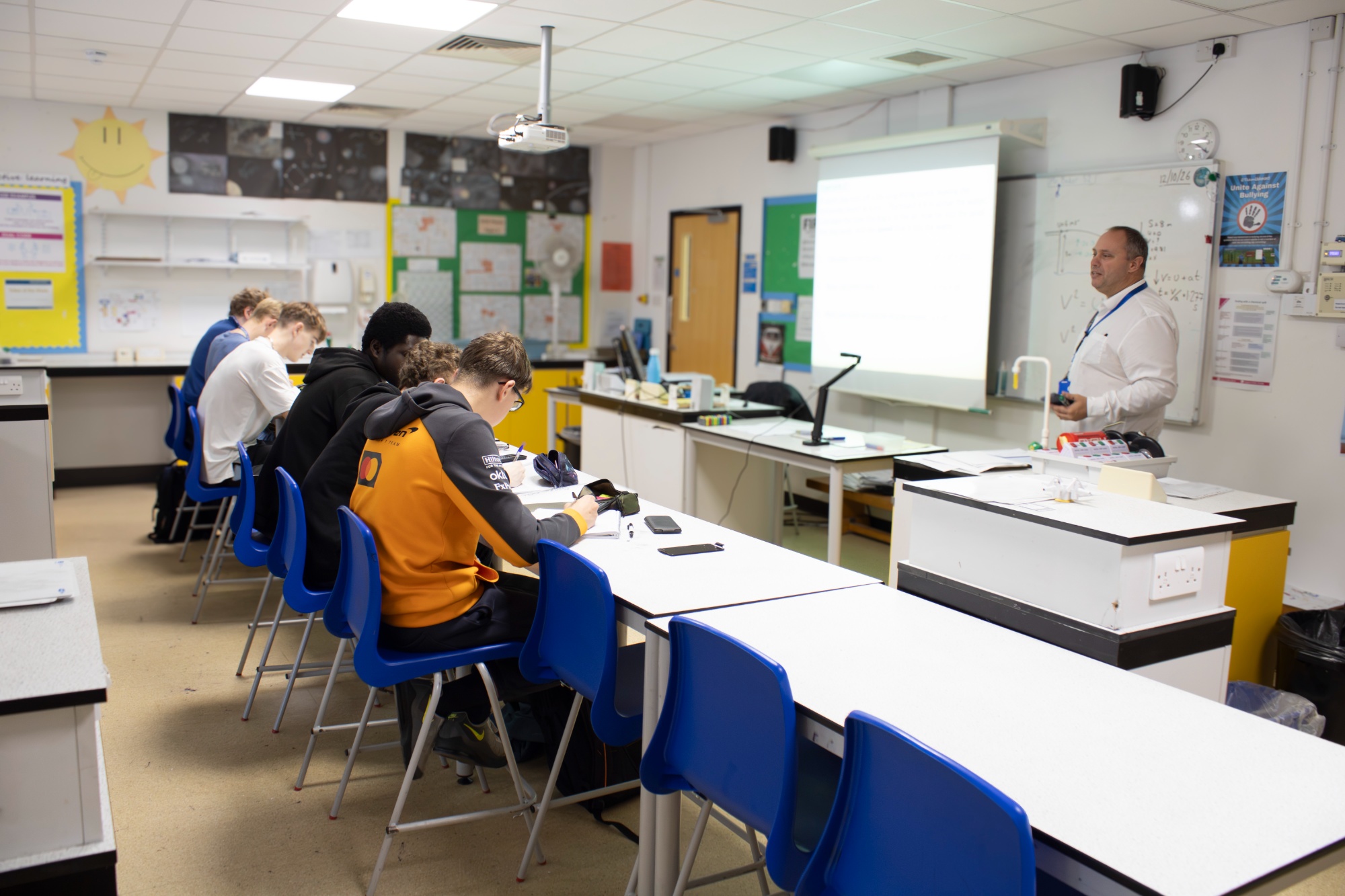
A-level Physics is an exciting and challenging course that opens the door to understanding the fundamental laws that govern our Universe. If you’re curious about how things work and enjoy pushing your thinking further, A-level Physics is a rewarding and inspiring choice.
WHY PHYSICS AT LISKEARD
Physicists at Liskeard will benefit from learning in small groups, taught by an experienced team, led by a 20+ year A-level physics specialist and 6th form tutor. Staff knowledge and local ties to both industry and universities provide expert support for next steps after A-levels.
ENTRY REQUIREMENTS
Physics 6 or trilogy science 66; maths 6
ASSESSMENT
Three written exams at the end of Year 13, plus a pass/fail Practical Endorsement
WORKS WELL WITH
Maths, Chemistry, Biology,
Product Design
MODULES AND UNITS
Year 12 (AS Level): Modules 1–4: Development of practical skills · Foundations of physics · Forces and motion · Electrons, waves and photons
Year 13 (A Level): Modules 5–6: Newtonian world and astrophysics · Particles and medical physics
A TYPICAL LESSON
Lessons usually start with a short recap of prior learning, followed by the introduction of a new concept using explanations, examples and demonstrations. Teachers often model solving example problems before students practice similar style questions independently, with support available. Often, lessons include practical experiments to reinforce concepts as well as develop data and analysis skills.
TRIPS AND ENRICHMENT
We regularly take part in the Exeter University Physics Challenge, competing against a range of pupils from across all Southwest Counties. Great fun, and an excellent addition to your UCAS application and personal statement.
LEADS TO
Studying OCR A Level Physics opens pathways to a wide range of university courses, including Physics, Engineering (Mechanical, Electrical, Aerospace), Astrophysics, Mathematics, and Computer Science. It also supports entry into career pathways such as engineering, research science, data analysis, medicine (with additional qualifications), and technology industries.
RECENT DESTINATIONS
Students who complete A Level Physics frequently progress to top universities, including Russell Group institutions, to study STEM-related degrees such as Physics at Durham or Mechanical Engineering at Birmingham. Previous pupils have also secured degree apprenticeships via university partners such as Babcock and Kier.
Politics
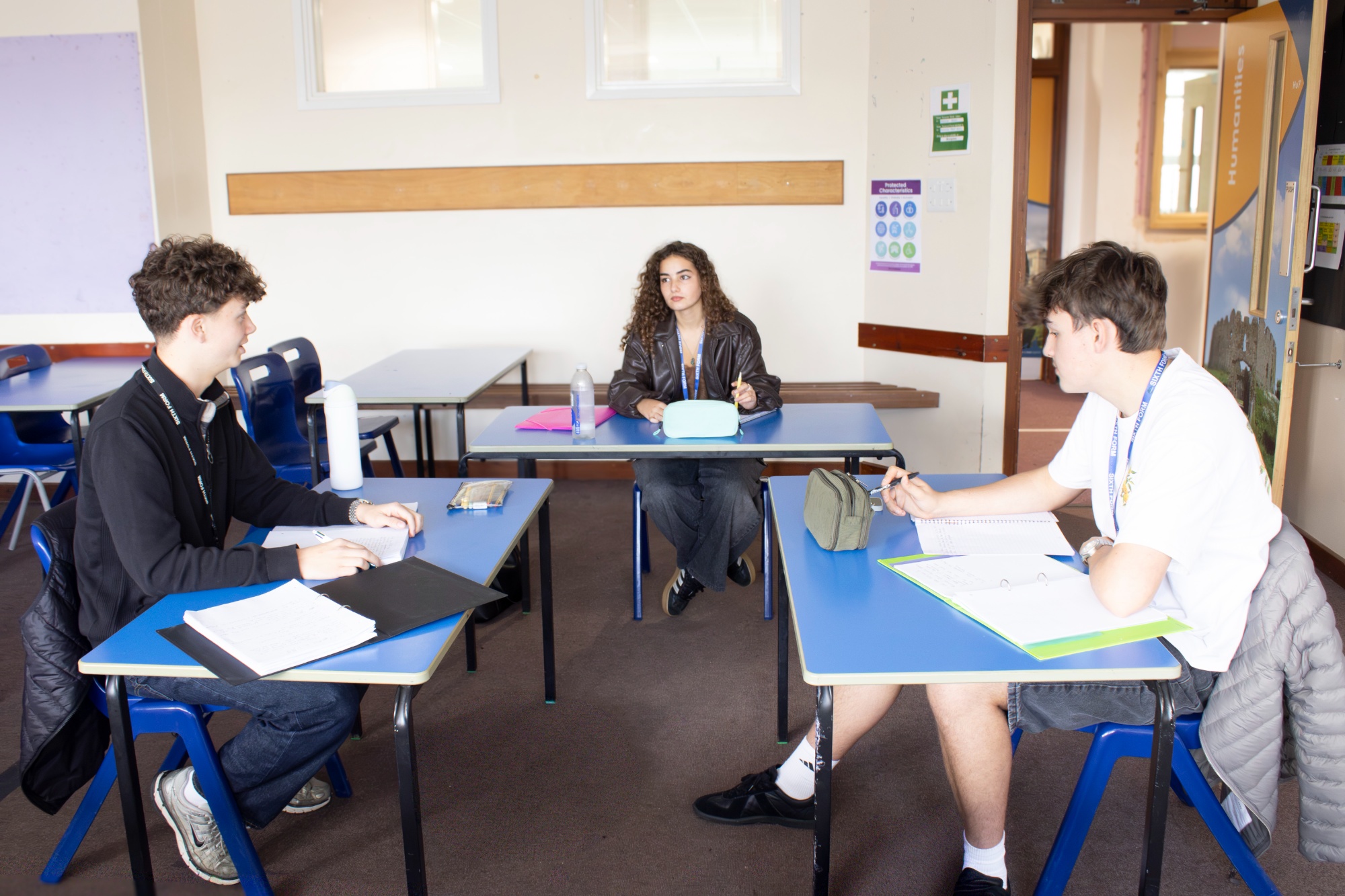
Who should have the right to vote, and how far should governments be allowed to limit our freedoms? Politics explores who holds power, how decisions are made and how people can challenge them.
WHY POLITICS AT LISKEARD
A shared approach to preparation, retrieval and feedback helps students connect British politics to wider international issues and become increasingly independent in how they read, think and argue.
ENTRY REQUIREMENTS
English language 6. GCSE History helpful but not essential
ASSESSMENT
Three two-hour written exams at the end of Year 13; no coursework
WORKS WELL WITH
History, English Literature, Geography, Criminology
MODULES AND UNITS
Year 12: UK Politics (democracy and participation, parties, electoral systems, voting behaviour, the media) · UK Government (the constitution, Parliament, the Prime Minister and executive)
Year 13: Political ideas (conservatism, liberalism, socialism, feminism, anarchism) · Global Politics (globalisation, global governance, power and development, human rights, the environment, the EU)
A TYPICAL LESSON
Lessons use current political examples to explain how institutions and ideas work. Preparation reading and Cornell notes feed into retrieval practice, discussion, source analysis and modelled writing.
TRIPS AND ENRICHMENT
Visits to Parliament or local council meetings, visiting speakers and debating opportunities.
LEADS TO
University courses include Politics, International Relations, Law, History and Journalism.
RECENT DESTINATIONS
New offer at Liskeard
Product Design
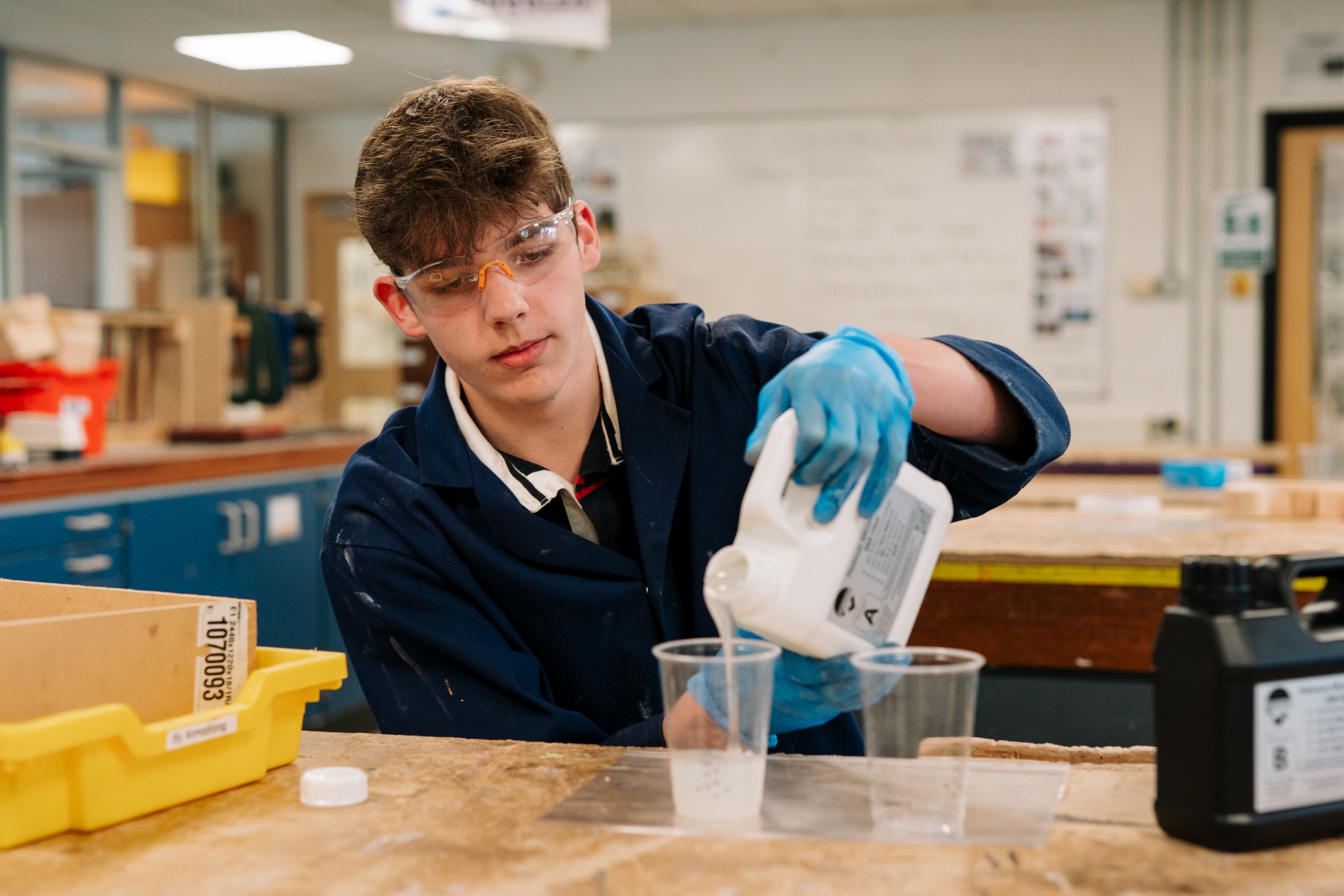
A Level Product Design is an exciting and creative subject that allows students to turn innovative ideas into real products. It combines practical skills with problem-solving, helping learners develop solutions for real-world challenges.
WHY PRODUCT DESIGN AT LISKEARD
Product Design is a very student-driven subject here at Liskeard School and, due to the small class sizes and excellent facilities and teaching staff, we are able to customise, adapt and explore your ideas within the project frameworks for a really tailor-made and personal A-level experience.
ENTRY REQUIREMENTS
Engineering 4 or product design 4. BTEC engineering or construction are also considered.
ASSESSMENT
Two written exams (50%) and a substantial design and make project (NEA) (50%)
WORKS WELL WITH
Two written exams (50%) and a substantial design and make project (NEA) (50%)
MODULES AND UNITS
Technical principles · Designing and making principles
A TYPICAL LESSON
Product Design A-level lessons are a broad mix of practical, design, theory and research lessons.
TRIPS AND ENRICHMENT
Students are encouraged to source and organise their own visits to designers and makers in line with their NEA research. Students are also encouraged to go to degree show exhibitions for similar subjects and courses.
LEADS TO
Destinations for A-level Product Design students in the past have included universities to undertake degrees in product design, architecture, civil engineering and building surveying; Babcock International (Plymouth) to undertake higher level apprenticeships in marine architecture, mechanical engineering & manufacturing, fabrication and business administration; Princess Yachts (Plymouth) to undertake higher level apprenticeships in carpentry/ boat building.
RECENT DESTINATIONS
Coventry University, Product Design BA (Hons)
Psychology
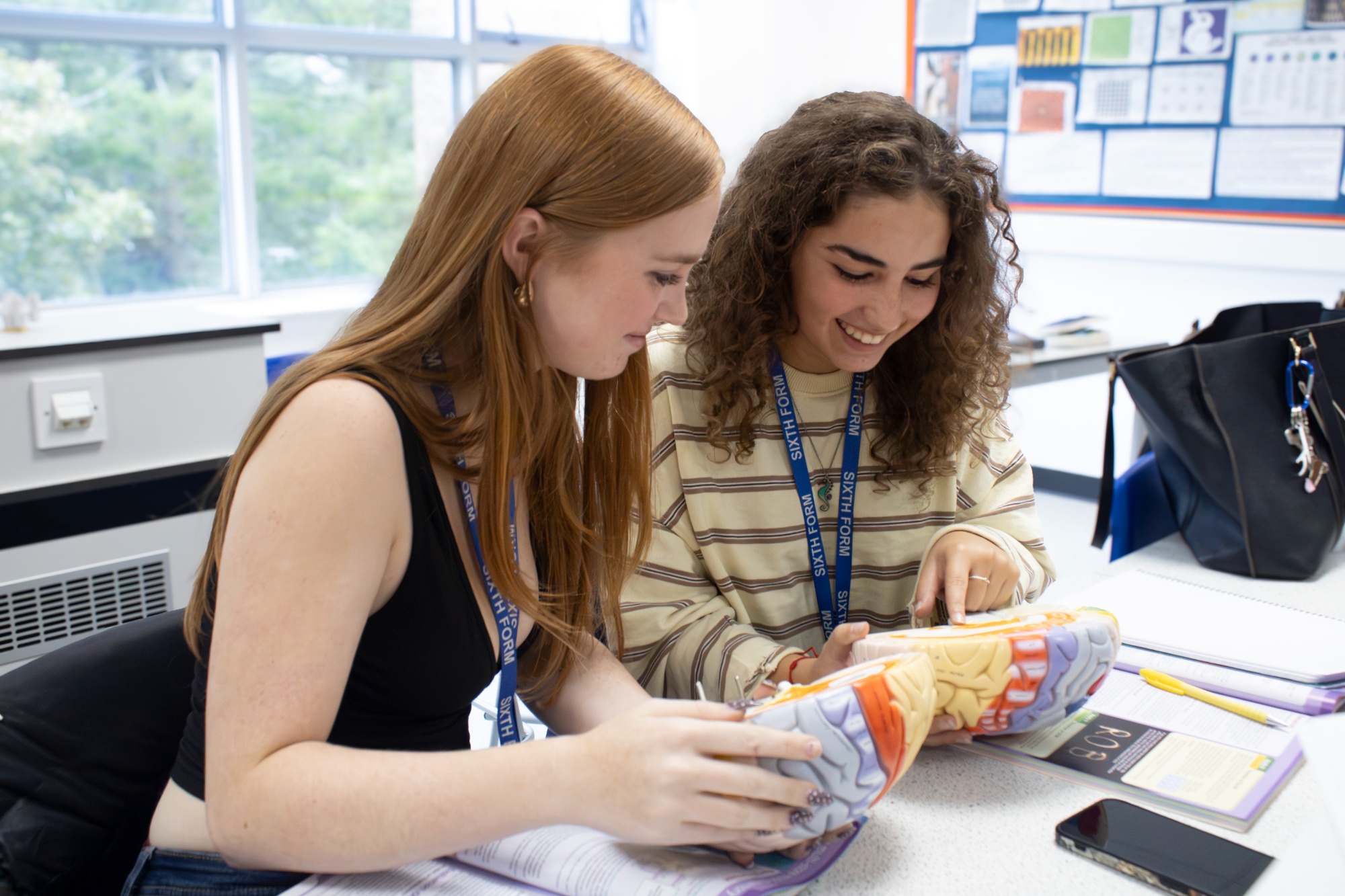
Psychology helps us understand human nature, challenge prejudice and develop a greater understanding of ourselves and others.
WHY PSYCHOLOGY AT LISKEARD
Students can choose from the available Paper 3 topics to reflect their interests. Students can tailor their A level to match what they need for university courses.
ENTRY REQUIREMENTS
Biology 6 or trilogy science 66; English 6
ASSESSMENT
Three exams at the end of Year 2; no coursework
WORKS WELL WITH
Any subject involving people, including Health & Social Care and Criminology
MODULES AND UNITS
Year 1: Social influence · Memory attachments · Clinical psychology and mental health · Approaches and research methods
Year 2: Issues and debates · Biopsychology Plus three optional topics: Option 1 Relationships, Gender, Cognition and development · Option 2 Schizophrenia, Eating behaviour and stress · Option 3 Aggression, Forensic psychology, Addiction
A TYPICAL LESSON
A typical lesson starts with a recap of previous material. We will look at the outline of a new theory and analyse relevant research. There will be discussion of concepts and exam questions to consolidate the learning. Students will design and conduct a practical for each topic.
TRIPS AND ENRICHMENT
Plymouth University baby laboratory, revision sessions at other schools.
LEADS TO
Psychology is recognised as a science by universities, and there are many pathways for the subject.
RECENT DESTINATIONS
Students from the course have become psychologists, psychiatrists, mental health nurses and counsellors. Others have used the subject as a pathway into the army, navy, air force, police and NHS roles.
Spanish
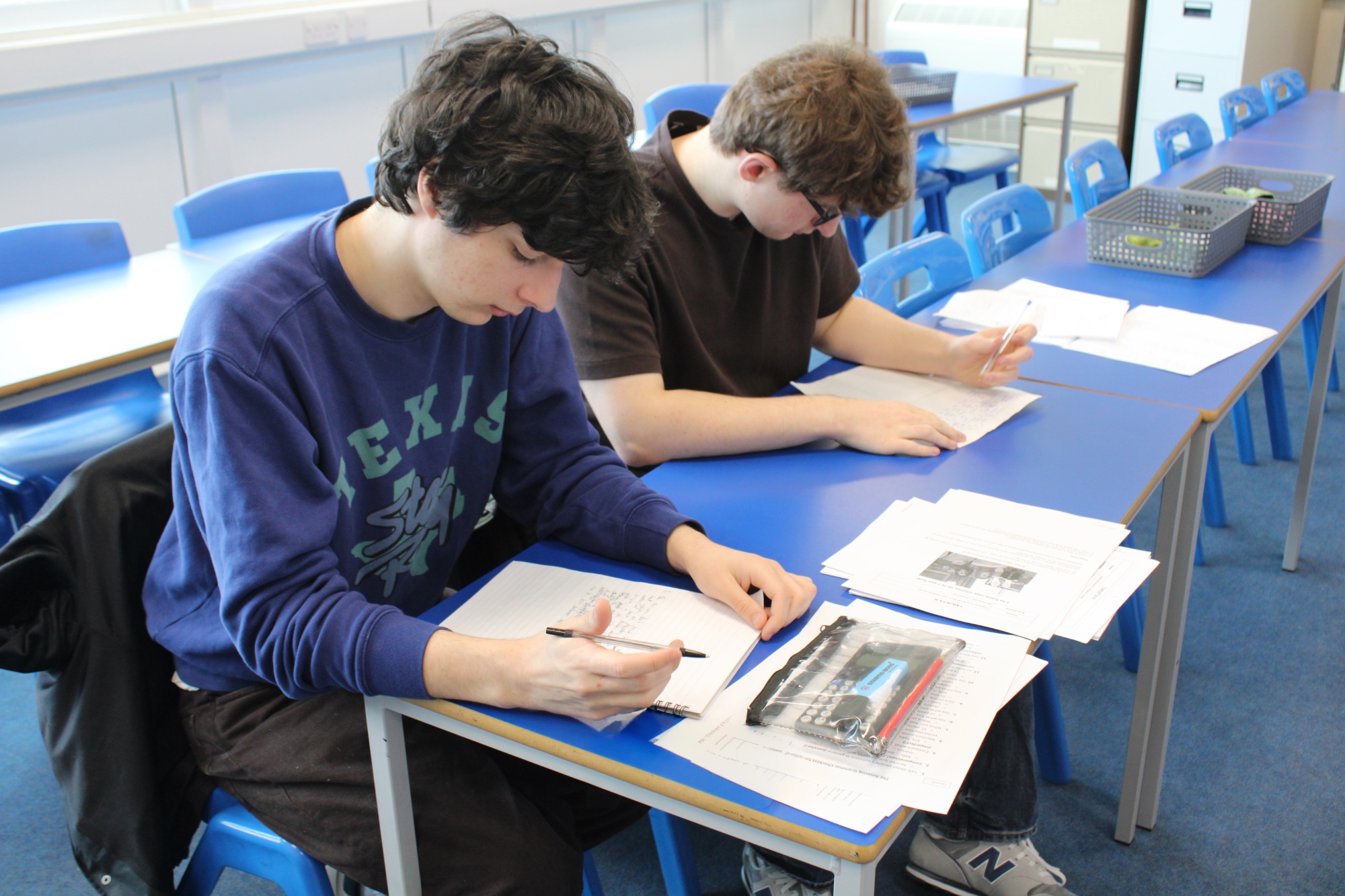
Develop your Spanish language skills and explore Hispanic culture, literature and lifestyles. Speaking more than one language is a vital skill in an interconnected world and a real advantage in the global economy.
WHY SPANISH AT LISKEARD
Confidence in a language grows by using it often and with purpose. Regular practice and feedback improve your skills, while the course immerses you in Spanish culture and ideas. You learn Spanish by using it meaningfully.
ENTRY REQUIREMENTS
Spanish 6
ASSESSMENT
Three exams: listening, reading and writing (50%); essay writing (20%); speaking (30%)
WORKS WELL WITH
French, English Literature, Geography, Business
MODULES AND UNITS
In-depth analytical study of a novel and a film, plus an individual research project on a topic linked to a Hispanic country and culture, presented and discussed in Spanish.
A TYPICAL LESSON
Lessons are taught largely in Spanish, mixing listening, reading and speaking activities on contemporary themes with grammar practice and translation. Students discuss the set novel and film, build vocabulary and regularly practice for the speaking exam.
TRIPS AND ENRICHMENT
Opportunities to practice with native speakers, cultural events and Spanish-language film, and language competitions.
LEADS TO
University study of languages, alone or combined with business, management, law, administration, ICT, engineering, international marketing or journalism. Careers include translating and interpreting, journalism, law, publishing, museum curation and working for an international company.
RECENT DESTINATIONS
Cardiff – Spanish and Japanese
Sport
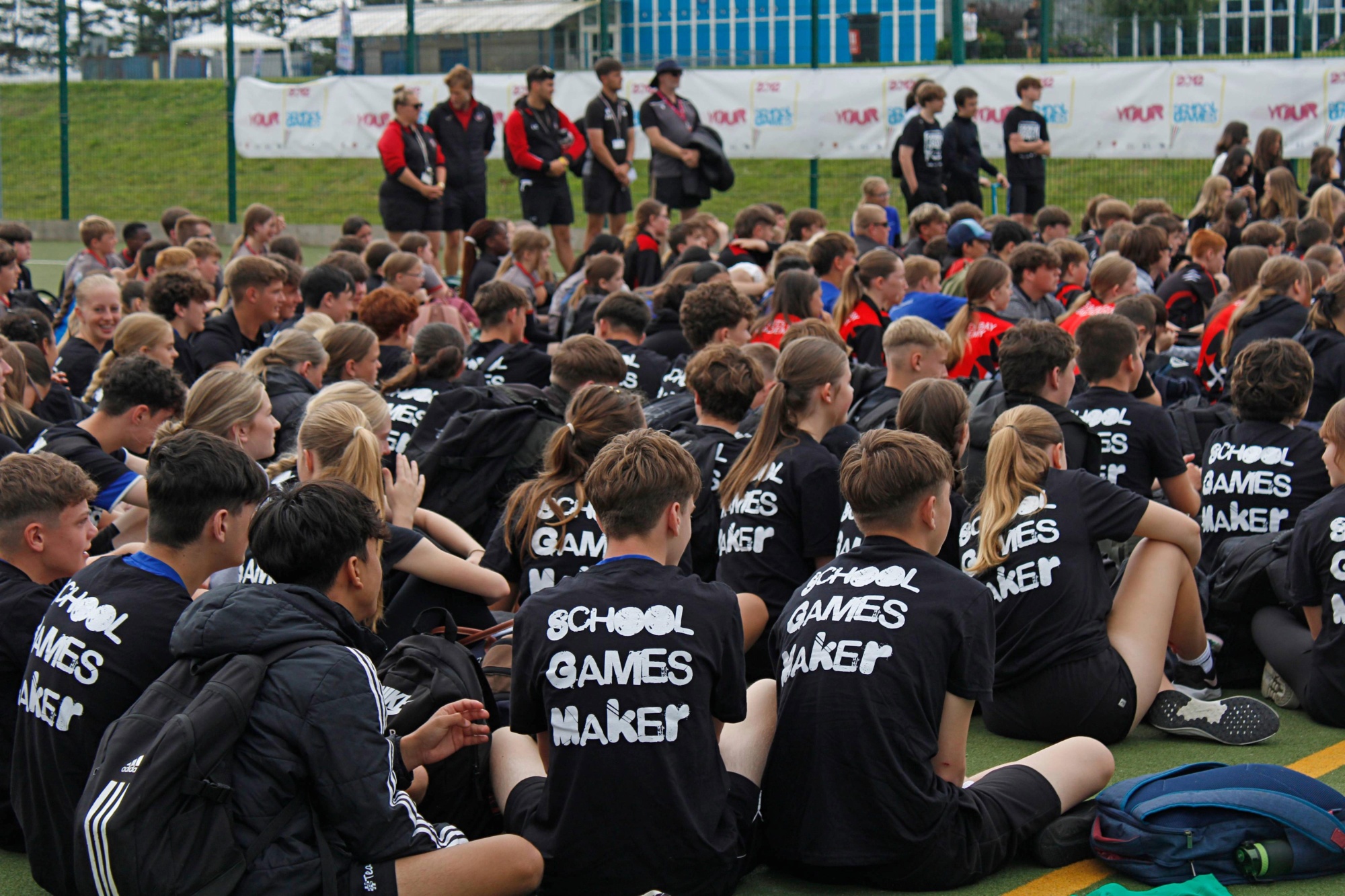
Do you enjoy learning through doing? This course combines practical sport, leadership and real-world application with academic study.
WHY SPORT AT LISKEARD
Do you enjoy learning through doing? This course combines practical sport, leadership and real-world application with academic study.
ENTRY REQUIREMENTS
PE 5, science 55, maths 5 and English 5; must play sport regularly
ASSESSMENT
External exams and internal coursework; graded Pass to Distinction*
WORKS WELL WITH
PE, Biology, Psychology, Health & Social Care, Business Studies
MODULES AND UNITS
Mandatory: Body systems and the effects of physical activity · Sports coaching and activity leadership · Sports organisation and development
Optional units may include: Working safely in sport, exercise, health and leisure · Nutrition and diet for sport and exercise · Physical activity for specific groups · Practical skills in sport and physical activities · Sport and exercise psychology · Performance analysis in sport and exercise
A TYPICAL LESSON
Lessons combine classroom learning, practical activities, leadership opportunities, presentations, independent research and coursework. Students regularly apply theory to real sporting environments and develop the professional skills required within the sport and physical activity sector.
TRIPS AND ENRICHMENT
Students have opportunities to coach and lead others, work with younger pupils, gain practical industry experience and develop employability skills. Opportunities to achieve additional industry recognised qualifications may also be available.
LEADS TO
Sport & Exercise Science, Sports Coaching, PE Teaching, Strength & Conditioning, Sports Therapy, Sport Psychology, Leisure Management, Personal Training, Outdoor Education, Armed Forces and Police careers.
RECENT DESTINATIONS
Students have progressed onto university courses, apprenticeships and careers in teaching, coaching, physiotherapy, leisure management, sport science, nutrition and outdoor education.
Art Textiles

Explore art and design through textiles, working with a wide range of media, processes and materials to build a portfolio of exciting work, from garments and outfits to installations and textile art pieces.
WHY ART TEXTILES AT LISKEARD
Develop your creativity and technical expertise in a supportive, specialist-led environment, with personalised guidance and diverse practical opportunities.
ENTRY REQUIREMENTS
Art 5 or textiles 5
ASSESSMENT
Personal investigation (60%); externally set assignment with a 15-hour exam (40%)
WORKS WELL WITH
Art & Design, Photography, Product Design, Business
MODULES AND UNITS
Year 12 (Term 1 & 2): Foundations of textile design - skills building introductory project
Year 12 (Term 3) & Year 13: Personal Investigation coursework project (Component 1)
Externally Set Assignment (Component 2)
A TYPICAL LESSON
A TYPICAL LESSON Typical lessons in Art Textiles are practically led, whether through bespoke workshops, guided practicals, or independent projects shaped by each student’s creative vision. Students explore fabrics and fibres, experimenting with texture, pattern, and design while developing technical skills and a personal style. This immersive, practical approach nurtures curiosity, encourages risk-taking, and inspires students to push the boundaries of textile art.
TRIPS AND ENRICHMENT
Annual visits to Arts University Plymouth and Falmouth University, externally led artist workshops plus an end-of-year student exhibition.
LEADS TO
Many students pursue art courses at university, building on skills and confidence from Art Textiles. This qualification opens creative and professional paths, offering a solid basis for further study and careers. Students advance to courses like Textile Design, Fashion, Surface Pattern, Fine Art, Costume, Interior Design, or Crafts, honing technical skills and creative practice. Whether aiming for a specialist art career or broader creative fields, Art Textiles provides practical skills and confidence in industry.
RECENT DESTINATIONS
Bournemouth University – BA (Hons) Textiles Design, University of the Arts London – BA (Hons) Fashion Photography, Cardiff Metropolitan University – BA (Hons) Interior Design, Falmouth University – BA (Hons) Fashion Marketing, Freelance Artist
Additional Qualifications
Extended Project Qualification
 The Extended Project Qualification (EPQ) will give you a taste of what university life is like whilst in the Sixth Form. You will develop the skills required to take charge of an academic project and learn how to carry out independent research on a large scale.
The topic you choose to research can be anything you want, within reason! Think about your interests and passions. You could opt to explore contemporary issues such as Climate Change, Human Rights or Animal Welfare. You may choose a topic which is linked to your future degree choice or career path. The project can also be practical, such as creating and delivering a lesson to Year 7 students or producing a TED talk for your peers.
The course begins with a short online programme of study skills, covering time management, decision-making, academic research, critical thinking and essay writing. This is supported by regular mini-lessons and ongoing advice from your supervisor. To achieve the qualification, you choose to complete either an artefact and short report or an essay of 5,000 words. With both options, you will document your progress through a Production Log and make an oral presentation of your conclusions.
The benefits of choosing an EPQ:
- The EPQ allows you to develop your knowledge of a topic you care about.
- The skills you develop will be invaluable for most jobs and university courses.
- The qualification is recognised by many universities as excellent preparation. Some universities lower the entry requirements on completion of an A grade EPQ.
The EPQ is the equivalent to an AS Level and an A* will gain 28 UCAS Points.
English Speaking Board
30 UCAS points at Distinction level
All university degrees and most jobs involve projects and presentations. This award is an excellent way of helping you to gain confidence in improving your communication skills as well as your analytical, critical thinking, and presentation skills.
Whatever your route to employment, employers continue to feed back that teamwork and communication skills are central to their success and need to be of a higher standard when young people enter the workforce. The development of effective communication, alongside an accredited qualification, will give you a clear advantage when applying for a place in college, university or in the job market. You can include the details on your CV or personal statement.
ESB in Speech is externally assessed and is a combination of individual presentations and group discussions. The award is designed to be a social and fun experience with lots of lively discussions and debates combined with great teamwork and camaraderie.
Sports Leaders
 This is a course designed to give students the skills needed to lead groups in safe sporting and recreational activity.
Further Education And Careers
The Level 3 Award in Sports Leadership is an ideal step towards achieving national governing body coaching qualifications and promotes the work of volunteers in sport. This award will provide a valuable insight into many careers in the field of sport and recreation as well as develop leadership skills. If your chosen career demands leadership qualities, this award is the ideal way to further understanding in this area. This award is looked upon favourably with applications to university and organisations such as Camp America.
Course Details
This award complements A Level studies as there is minimal written input and no formal written exam.
Leadership ability, attendance and 30 hours of leadership service are the key areas of assessment. This award does not require specific ability in any one sport but aims to develop confidence in students taking responsibility for small groups. The course comprises eight units:
- Developing leadership skills
- Plan, lead and evaluate a sports activity event
- Lead safe sports/physical activity sessions
- Plan, lead and evaluate sports/physical activity sessions for children
- Plan, lead and evaluate sports/physical activity sessions in the community
- Plan, lead and evaluate sports/physical activity sessions for disabled people
- Plan, lead and evaluate sports/physical activity sessions for older people
The award is further supplemented by a placement in our feeder primary schools.
Further Advice and Information – Mr M Lemin